Thursday, August 11, 2011

The Help reviewed: bell hooks, Oprah, and Melissa Harris-Perry

In the previous post, I gave you homework to read The Help and to see the film.  Let me now confess I haven't finished the book.  My spouse did, and she gave it, some reluctantly, to a former neighbor, our friend before I had a chance to read it all.  I say "some reluctantly" because our friend, our former neighbor, is AfricanAmerican and we're not.  We're EuroAmericans.  And we'd read the reviews by bell hooks and by Oprah Winfrey.  And if you haven't yet seen the reviews, then I'll share them here, including the very important one also by Melissa Harris-Perry.

Anyway, our friend's spouse called me last night.  It was the first time we've spoken since we moved nearer where I work, away from the former neighborhood.  He's also AfricanAmerican.  He called to invite me to attend a "man" conference at The Potter's House tonight in Dallas, a conference led by T. D. Jakes.  So in just a bit, I'll drive up to our friends' home and go with him.  If we dare, we might discuss men and women and black and white, and The Help, written not by an AfricanAmerican although a portrayal of AfricanAmerican women through the telling by a character not an AfricanAmerican woman.  bell hooks may or may not be someone we discuss tonight, although I'd like to ask my friend taking me to the T. D. Jakes conference on manhood how she might critique what we're doing. 

When my spouse first brought home The Help to read, my first question was, "I wonder what bell hooks says about this book?"  I knew what hooks had said about "Homeplace: a Site of Resistance."  She said:
Throughout our history, African-Americans have recognized the subversive value of homeplace, of having access to private space where we do not directly encounter white racist agression. Whatever the shape and direction of black liberation struggle (civil rights reform or black power movement), domestic space has been a crucial site for organizing, for forming political solidarity....(page 47, Yearning: Race, Gender, and Cultural Politics)
When I was a young girl the journey across town to my grandmother's house was one of the most intriguing experiences... there ... all that loud talk, the talk that was usually about the old days ... but also how we lived and survived as black people, how the white folks treated us.  I remember this jouney not just because of the stories I would hear... because we would have to pass that terrifying whiteness -- those white faces on the porches staring us down with hate....  Such a contrast, that feeling of arrival, of homecoming, this sweetness and the bitterness of that journey, that constant reminder of white power and control.
I speak of this jouney as leading to my grandmother's house, even though our grandfather lived there too.  In our young minds houses belonged to women, were their special domain, not as property, but as places where all that truly mattered in life took place—the warmth and comfort of shelter, the feeding of our bodies, the nurturing of our souls. There we learned dignity, integrity of being; there we learned to have faith. The folks who made this life possible, who were our primary guides and teachers, were black women. 
Their lives were not easy.  Their lives were hard.  They were black women who for the most part worked outside the home serving white folks, cleaning their houses, washing their clothes, tending their children -- black women who worked ..., whatever they could do to make ends meent, whatever was necessary.  Then they returned to their homes to make life happen there.  This tension between service outside one's home, family, and kin network, service provided to white folks which took time and energy, and the effort of black women to conserve enough of themselves to provide service (care and nurturance) within their own families and communities is one of the many factors that has historically distinguished the lot of black women in patrcarchal white supremacist society form that of black men.  Contemporary black struggle must honor this history of service just as it must critque the sexist definition of service as women's "natural" role.
. . . [they fostered] a radical political dimension . . . [and created] a site of resistance and liberation struggle (page 41, Yearning: Race, Gender, and Cultural Politics)
I shall never forget the sense of shared history, of common anguish, I felt when first reading about the plight of black women domestic servants in South Africa, black women laboring in white homes. Their stories evoked vivid memories of our African-American past....
I want to remember these black women today. The act of remembrance is a conscious gesture honoring their struggle, their effort to keep something for their own. I want us to respect and understand that this effort has been and continues to be a radically subversive political gesture. For those who dominate and oppress us benefit most when we have nothing to give our own, when they have so taken from us our dignity, our humaness that we have nothing left, no “homeplace” where we can recover ourselves. I want us to remember these black women today, both past and present. (Yearning: Race, Gender, and Cultural Politics pages 42-43).
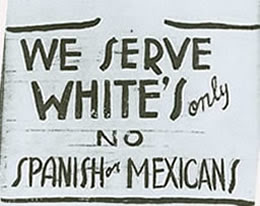
hooks got me remembering Nancy.  Nancy was The Help for my white family when I was a little boy in Corsicana, Texas USA during the Jim Crow era.  Did Nancy or her daughters and sons fear when they passed into our neighborhood and into our home?  And what subversion of the segregation in very very profound ways.  What feminism.  What love in contrast to hate.  What a critique of the status quo, of the power, of the white supremacy, of the patriarchy.  I've asked my dad and mom if they know where she is today.  What is she doing?  No, they tell me- they don't know.

So how does bell hooks critique The Help?  Isn't it about black women, the very ones she remembers and wants historically to be remembered?  Here's her fair and good and just assessment:
“Here, I’m going to be mean,” she said, noting that the books she would mention are beloved by many, including The Divine Secrets of the Ya-Ya Sisterhood, The Help, and The Secret Life of Bees. “These books are seen as showing the organic, fun time we can have together,” she said. “Regardless of race, we can be light, sentimental, we don’t have to be political.” Then she called this avoidant perspective for what it is: “… bullshit.”
Stockett, who wrote this book because she was inspired by her own perceived experience, is seen by hooks as “slobbering” all over her nanny, who Stockett admittedly hadn’t seen since she was 16. “She didn’t know what happened to her,” hooks said. “How does she know this black woman forgave her? She doesn’t tell us where she got her information from, but she doesn’t have to, because that wasn’t the point of the book.”
hooks addressed this thread as well: that these books want to perpetuate the outright mythology (my word, not hooks’) that women of multiple races and ethnicities are not really separated by anything after all: “we’re just two people with nothing standing between us,” hooks said. But there is a difference, and it’s that “white folks are not called to extreme choices.” And it is often those who have the luxury to decline to be political, because they can be, who oppose Marxist, feminist, and post-colonial readings of texts, who like to say things like “let’s not get all political about this,” who prefer to approach “the text on its own terms,” who are perpetuating the fiction that social equality has been achieved: “by centering on the lives of women” in these books, hooks said, “the anti-feminist, pro-racist idea is pushed that the patriarchy has been dismantled, that it has ended, that there is no need for feminism, and that society is now post-racial.”
“Bonds of affection?” hooks asked. “Why not also show the rage, the anger, the hatred, as well as the bonds of affection?”

Applying frank, powerful and controversial racial analysis to leading theories has been the intellectual duty that hooks has fulfilled for decades, and hearing her speak on such terms was remarkably refreshing and inspirational. At IC on Tuesday, she used her hallmark description of the American political system, imperialist white supremacist capitalist patriarchy, over and over again, and she sounded at once dated and invigorating, both antiquated and completely fresh. The black feminist perspective that she fashioned is threatened by an encroaching social and political fascism that she mentioned toward the end of the talk. But she emphasized Pema Chodron in her approach to “start people where they are” and to find the “openings” in seemingly airtight systems: “what I learned from Foucault is that there are no closed systems,” she said. “All systems have openings. You have to find the openings.”
For hooks, that opening was in writing. Once she started writing, she said, “suddenly there was room for me in a system that doesn’t want me and doesn’t pay me well.”
In response to the person who asked about giving up privilege, and in response to someone else who suggested that demolishing the class system must precede any kind of social equality, hooks emphasized that the formation of strong and healthy self esteem is crucial to what she called “mutuality:” equality might be beyond the scope of what is immediately realistic, but no matter how much privilege you have, you don’t need to dominate others, she said, and for this, “the challenge is to be engaged where we are, loving ourselves and others, where we are. This is crucial to our struggles.”
The above is a report by Danielle Winterton, who heard bell hooks when she appeared at Ithaca College Tuesday, Oct. 5, 2010.

Now, here's Oprah, from O Magazine:
Then: The Help
By Kathryn Stockett
464 pages; Amy Einhorn/Putnam

Practically from the moment it was published in 2009, the reading world embraced Kathryn Stockett's The Help, a debut novel about black maids who finally speak up about their white employers during the civil rights movement. A fixture at the top of most best-seller lists, it became the feel-good book of the year.

Now: Glorious
By Bernice L. McFadden
250 pages; Akashic

Bernice L. McFadden's riveting novel, Glorious, starts in the Jim Crow South and moves to the Harlem Renaissance, and finally to the same civil rights era Stockett chronicled, but it's a grittier, more brutal tale. Easter Bartlett, a young black woman, flees Georgia after seeing too much, including a mob lynching of a pregnant woman. Easter is no victim, though. In Harlem she encounters a world where crowds gather to cheer the "Black Moses" Marcus Garvey and publishers enthuse about the exotic genius of "Negro" writers. Still, it's hardly a postracial paradise. McFadden—in vivid vernacular—brilliantly skewers the vanity of self-congratulatory liberals. A white woman returning from Paris with her black lover gushes, "Before our encounter, I had never even spoken to a Negro. They were invisible to me and now I see them everywhere!" Easter achieves some brief literary fame, but by 1961, she is tired, and battered by stubborn racial attitudes. In confronting one final injustice, she doesn't just survive; she triumphs—gloriously. — Karen Holt
And Oprah is listening, liking the book but wanting to hear what others say and think about the movie.  She's publicly called for our opinions.

And then, finally, here's Melissa Harris-Perry noting how the film based on the novel neglects the history that “it was rape, it was lynching, it was the burning of communities”:


So now I'm off to hear T. D. Jakes.   I wonder if he's seen or read The Help, what he thinks.  Maybe tomorrow I'll have opportunity to say more.

Wednesday, August 10, 2011

Jesus: "The Help" and the "Helpmeet"

INTRO

In this post, I'm just going to follow the logic of the "biblically" sexist doctrine of men such as Denny Burk, Wayne Grudem, and Raymond C. Ortlund, Jr. to conclude that Jesus is functionally equal with an African American maid for whites and that Jesus is, likewise, functionally equal with a wife who must help her husband while following her husband's leadership.


HOMEWORK

Here's a little homework you may want to do first, before you read my blogpost.  Read Kathryn Stockett's The Help (or go see the film based on her book); and read Suzanne McCarthy's brilliant and important post, "The Help"; and read Genesis chapters 1, 2, and 3 in the Hebrew; and read the book of Hebrews in the Greek.  If you really want to go crazy with preliminary research, then also read Autumn Sandeen's essay that might have you asking what sign Jesus surely had to follow before drinking water in public or when entering the public bathrooms.


Maybe read how Jesus spoke about sex (but do know that you may have to read the Bible some here then).

All done?  Okay.  Here we go.

REVIEW

Let's review the logic of the "biblically" sexist doctrine:
Helping speaks to difference. The text says that God created her to be a “helper”–a role that involves aiding and supporting the leadership of her husband. God did not assign this role to the man. He assigned it only to the woman. Thus before there is any sin in the world, God creates man and woman to be equal with respect to their humanity (being created in the image of God) but to be different with respect to their roles. The woman is to be the helper.
-- Denny Burk, in a blogpost

Whenever someone helps someone else the person who is helping is occupying a subordinate or inferior position with regard to the person being helped.
-- Wayne Grudem, in a book of systematic theology introducing "biblical" doctrine

The paradox is this: God created male and female in His image equally, but He also made the male the head and the female the helper....

What will now emerge clearly from Genesis 2 is that male-female equality does not constitute an undifferentiated sameness. Male and female are equal as God’s image-bearers. They are spiritually equal, which is quite sufficient a basis for mutual respect between the sexes. But the very fact that God created human beings in the dual modality of male and female cautions us against an unqualified equation of the two sexes. This profound and beautiful distinction, which some belittle “as a matter of mere anatomy,” is not a biological triviality or accident. It is God who wants men to be men and women to be women; and He can teach us the meaning of each, if we want to be taught. We ourselves can feel intuitively the importance of distinct sexual identity when we see, for example, a transvestite. A man trying to be a woman repulses us, and rightly so. We know that this is perverse. Sexual confusion is a significant, not a slight, personal problem, because our distinct sexual identity defines who we are and why we are here and how God calls us to serve Him....

On the other side of the paradox, the woman is the man’s helper. The man was not created to help the woman, but the reverse. Doesn’t this striking fact suggest that manhood and womanhood are distinct and non-reversible? Doesn’t this make sense if we allow that, while the man and the woman are to love each other as equals, they are not to love each other in the same way? The man is to love his wife by accepting the primary responsibility for making their partnership a platform displaying God’s glory, and the woman is to love her husband by supporting him in that godly undertaking.

So, was Eve Adam’s equal? Yes and no. She was his spiritual equal and, unlike the animals, “suitable for him.” But she was not his equal in that she was his helper. God did not create man and woman in an undifferentiated way, and their mere maleness and femaleness identify their respective roles. A man, just by virtue of his manhood, is called to lead for God. A woman, just by virtue of her womanhood, is called to help for God.

-- Raymond C. Ortlund, Jr., in a chapter in a book written to recover "biblical" manhood and womanhood
Do we need a summary?  The "biblical" sexist logic of Burk, Grudem, and Orlund is this:

Women may well be created equal with men ontologically, 
But women are designed functionally even biologically to help men;
Therefore: men are over women functionally and biologically.

This is exactly the separationist sort of logic that Aristotle used in his Politics and in his biological treatises to separate the sexes naturally.  It's the differentiating logic that Nancy Mairs calls the binary or the fundamental structure of the patriarchy.  It's the logic not only of sexists but also of racists:  of the European and American owners of African people as their slaves; of Adolf Hitler and his Nazis rounding up and mass murdering Jewish people; of the defenders of apartheid in South Africa and of the apologists for the Jim Crow laws in the southern states of the United States of America.  It's the logic that appeals to marked bodily difference in order to order society in such a way that the marked ones are lower than the default ones.  "Separate but equal" - is that phrase, that old mantra, which orders the separateness of bodies first, but then "equality."  And now the words of power, the wedge of separation of the "equals", are purportedly "biblical."  Notice, if you can, how the sexist, separational logic of Burk, Grudem, and Orlund drives their interpretation of the Bible and its words.  It drove the interpretation of Warren Jeffs, who said:
“I can see more clearly why John Taylor went into hiding as the government and the courts would demand he betray the Lord’s trust and also to take his life as they did Joseph Smith, as the world did against Joseph Smith, and the Lord has shown me this, that my enemies don’t just want me to be taken prisoner, but they want me dead. But the Lord has directed that I go into deeper hiding, and continue to gather the faithful, develop the lands of refuge and keep the redemption of Zion mission progressing. I have been instructed of the Lord to have my scribe and helpmate Naomie, get better disguise clothes. And we are working on whatever the Lord directs.” (Priesthood Record, July 30, 2004)
 and
"A good wife is trained for her husband and follows the spirit of peace,"


JESUS: "THE HELP"

In the Intro of this post, I said we'd follow the logic of the "biblically" sexist doctrine of men such as Burk, Grudem, and Ortlund to conclude that Jesus is an African American maid for whites and that Jesus is a wife who must help her husband while following his leadership.  Let's do this.

For homework, I suggested you read Genesis 1, 2, and 3 in the Hebrew.  I probably should have suggested you read all of the Hebrew references to God as "the help," references made by just a single word, עזר `ezer.  There are the two references to the first woman as "the help" of the first man.  There are sixteen references to God as "the help" of his people.  By Wayne Grudem's system of theology, by his doctrine, "Whenever someone helps someone else the person who is helping is occupying a subordinate or inferior position with regard to the person being helped."  This is certainly true logic in the USA during the Jim Crow era, when women who were of African descent were "the help" of white families.  My own family, for example, "hired" Nancy in Corsicana, Texas as "the help"; my siblings and I were young children and just babies, and Nancy took care us of when my white father and mother needed her help.  She was not paid what a white nanny and cook and janitor was paid.  And she occupied a subordinate and an inferior position in our household.  But does the "position" of helper necessarily mean that that person must submit to the one being helped?  If you read all of the Hebrew "help" references in the Bible, then just two apply to the woman and sixteen apply to God.

So now we can follow on to the book of Hebrews and then to Jesus.  As you noticed in doing your homework, the writer of the book of Hebrews (in chapter 13, verse 6) quotes Psalms 118:6, which has a phrase, now in Greek translation, that goes like this:

Κύριος ἐμοὶ βοηθός

In the most accurate English translation available to Burk, Grudem, and Orlund, that goes like this:

"The Lord is my helper" (ESV)

Well, this isn't exactly referring to Jesus.  "The Lord" or Κύριος refers to the unspoken name of God, or as the psalmist writes it, to יהוה.  But what we should notice is that Greek word for "helper"; it's βοηθος.  When other Jewish writers were using Greek to translate the Hebrew of the Bible, then they frequently used βοηθός to mean "the help."  For example, Genesis 2:18 and Genesis 2:20, the references to the woman as "the help" are both translated with βοηθος.  And Psalms 33:20, which uses the same Hebrew word for "the help" as do the Genesis verses for the woman, is also translated with βοηθος.  Of course, for Psalms 33:20, "the help" refers to God again in that position of helping humans, the psalmist and his people.  In the most accurate English translation Burk, Grudem, and Orlund can find, that Psalm goes like this:

"Our soul waits for the LORD;
   he is our help and our shield."(ESV)

So what?  Well, as you noticed when you did your homework, the writer of the book of Hebrews uses the same Greek word for "the help" for Jesus as was used.  Hebrews 4:16, as you recall, goes something like this:

"14Since then we have a great high priest who has passed through the heavens, Jesus, the Son of God, let us hold fast our confession. 15For we do not have a high priest who is unable to sympathize with our weaknesses, but one who in every respect has been tempted as we are, yet without sin. 16 Let us then with confidence draw near to the throne of grace, that we may receive mercy and find grace to help in time of need."  (ESV)

In Greek, that last bit goes like this:

Προσερχώμεθα οὖν μετὰ παρρησίας τῷ θρόνῳ τῆς χάριτος, ἵνα λάβωμεν  ἔλεον [or ἔλεος], καὶ χάριν εὕρωμεν εἰς εὔκαιρον βοήθειαν.

And from whom do the readers find this "grace to help"?  Jesus.  Jesus is "the help" here.

Just like God, equally "the help," ontologically and functionally and biblically.


JESUS: "THE HELPMEET"

Again we look at Hebrews, and again we read about Jesus there.  Again, the original biblical language for this man is functionally equal to the original biblical language used functionally for Eve, for the wife of Adam, for woman, to separate her from man.  Just as the woman is designed to be the helpmeet of the man, so Jesus is naturally born according to the writer of Hebrews to be the helpmeet of the offspring of Abraham, the people, those who are tempted.  Here it is:

16For surely it is not angels that he helps, but he helps the offspring of Abraham. 17Therefore he had to be made like his brothers in every respect, so that he might become a merciful and faithful high priest in the service of God, to make propitiation for the sins of the people. 18For because he himself has suffered when tempted, he is able to help [βοηθῆσαι] those who are being tempted. (Hebrews 2, ESV)

THE TWIST

The twist on all this sexist, masculinist logic is not that there's a slippery slope where nobody can distinguish any body else's body.  It's not that bathroom labels are going to be ever so more confusing or that wives cannot help their husbands from time to time.  It's not that Jesus really is a black woman or a submissive wife.  Rather, it's just that the language that's actually biblical makes Jesus functionally what Denny Burk, Wayne Grudem, and Raymond C. Ortlund, Jr.say he, as a man, cannot be.  Jesus functionally and ontologically is a human being like any woman.  According to the Bible and its language, he is the help and is a helpmeet.

Tuesday, August 9, 2011

My affinity to feminism

"My affinity to feminism (or postcolonialism or liberation) has always been based on that call to live faithfully as the body of Christ."

Now how often do you hear somebody say something like that?  Well, it's Julie Clawson speaking up. 

And she links to a blogpost where Jos Truitt is saying something similar about something larger than herself and saying it, perhaps, to a larger audience: 

"My feminism [is] ... about recognizing the existence of gendered systems of oppression and working for justice, working to change these systems, which often involves government taking action against injustice."

I really like that.  So today I'd like to make this observation again:

"My affinity with feminists is more profound perhaps than mine with bible bloggers because feminists tend more generally to be much more inclusive (both personally and methodologically)."