Showing posts with label belief. Show all posts

Thursday, April 28, 2011

About This Topic, well honestly

It is less dangerous to draw a cartoon of Allah French-kissing Uncle Sam — which, let me make it very clear, I have not done — than it is to speak honestly about this topic.
-- authoress, comedienne, Tina Fey, "Confessions of a Juggler"
I know that there’s going to be a segment of people for which, no matter what we put out, this issue will not be put to rest. But I’m speaking to the vast majority of the American people, as well as to the press. We do not have time for this kind of silliness. We’ve got better stuff to do. I’ve got better stuff to do. We’ve got big problems to solve. And I’m confident we can solve them, but we’re going to have to focus on them — not on this.
-- speaker, President, Barack Obama, The White House
Tina is speaking honestly about the dicey topic of mothers in the workplace; Barack about the public certification of his birthplace.  I'd like to speak about something else too.  (But feel free to skip down to the last couple of paragraphs, more on Tina and Barack and silly topics.)

One thing that first motivated me to do human-subject, sociolinguistic research on prejudices of certain individuals toward others was encountering the profound and hurtful ugliness that my colleague Tan Ai Lin (Ailene) experienced.   Would you believe that the prejudice was unfair?  Not only had Ailene grown up in a nation that saw her Chinese roots as a threat to the "indigenous" race of people who ran their country politically and culturally but she also had grown up there, in that place, a girl (and not a boy). When I met her, she was in the U.S.  She was multi-lingual (her mother mainly speaking Hakka, her father Cantonese, her maternal grandmother Hokkien, and her playmates and school teachers also Malay and English), she was a graduate student in linguistics at the university where we both worked as instructors, and she was more than qualified to teach first-year writing and English as an additional language.   In fact, the faculty members in the Department of Linguistics were so impressed with her pedagogy that they assigned her to mentor other graduate students who were just learning how to teach.  I was one of her mentorees and acquired from Ailene numerous tricks of the trade which, some twenty-three-years later now, I still use and try to pass along to those I mentor.  However, the natural fact is Ailene had darker skin, a "non-native," "non-standard" English speaker's accent and lexicon and syntax, and a body sexed female.  And the silly thing is that her U.S. "freshman" composition students and her international ESL students believed that she was inadequate.  The tragic thing is that Ailene herself came to believe some of the prejudicial things that some of her students said about her.  It wasn't so much that she was convinced that they were right when they said she was "not a good teacher"; rather it was more that she was hurt when the student evaluations came in and there were racist and sexist, anonymous, comments made about her, comments which the departmental chairman had the audacity to call her in to question her about.

That's what first prompted me to start doing sociolinguistic research using W. E. Lambert's matched-guise technique.  I wanted to investigate the prejudices.  Prejudices is actually one of the words in the title of my M.A. thesis and it figures again in other research I've done in different places, some published.  What are the profound beliefs one person has about another?  Why?  How do they become public or stay private?  When do they form into hurtful silliness?  How come they don't change easily?  How do institutions and textual authorities and cultures perpetuate the beliefs?  How long?  How long?

My first project was to interview 100 Chinese students at the university.  Some, like Ailene (whom I did not interview for this study), were from Malaysia.  In fact, 50 were from Malaysia or some other former or current British colony such as Singapore, Brunei, and Hong Kong.  (The other 50 were from the mainland or Taiwan.)  So I asked them about their own languages, about their English, about others' English, about who they believe speaks the best English.  "The British speak the best," was the general answer from those who grew up in Hong Kong or in the former colonies.  ("It's the Americans," was the general answer to the same question from those who were here in the USA for higher education after having had the rest of their education in Chinese, not British-system, schools.  So far, no surprise.)  However, what is surprising was the contradiction.  Most of the 50 Chinese students who grew up in the British-influenced school systems and who professed publicly their belief that "The English speak the best English" ended up contradicting themselves.  They believed, they said, that the best English is spoken by the English not the Americans.  But they believed that actual speakers of British English did not speak as well as actual speakers of American English.  That is, when they listened to tapes of people speaking British English and American English, they overwhelmingly rated the language of the British speakers much lower than they rated the speech of the Americans (at least overwhelming in terms of statistical significance).  They rated the American English speakers as having better English, as better models of English for learners, and as better teachers of English.  And then it got really personal.  The Chinese who'd publicly said that "The best English is spoken in England by the English" rated the American speakers of English, in general, more intelligent, better looking, friendlier, more trustworthy, kinder, and wealthier than the British speakers of English.  (Now, to be sure, the American speakers and the British speakers were talking about the very same topic in the very same -- weather in Texas and how it changes constantly.  So it wasn't the topic that prejudiced Chinese students on their private ratings of the speakers.  And, the American speakers and the British speakers were actually the very same people.  Yes, that's right.  I'd hired actors who could speak both varieties of English, and other varieties too.  Linguistics faculty members and graduate students -- all from America -- listened and were fooled into thinking the actors speaking British English were not the same individuals who were speaking American English.  Likewise, all of the members of the British club in Dallas at the time listened and believed that each actor was different people, a Brit and an American and so forth.  So it wasn't the voice quality that prejudiced Chinese students on their private ratings of the speakers.  It was something else.  In public, British England was the standard, the model, the gauge by which a Chinese English speaker's English is to be measured.  But in private, the Chinese speaker was willing to believe, to really believe, something else.)

Well, I've bored you long enough with science, with research.  I might as well have bored you with stories of my childhood, of my father, who believed he was the God-appointed head of his household, that his children were to obey him but that his wife really was too.  His employer, a Christian foreign mission board, believed that he should hold the position of "field evangelist" while his wife should be assigned differently and in a complementary way, as his "helpmeet," to "church and home."  His bible and his reading of that Bible reinforced those beliefs.  And my mother, his wife, had no say.  Literally, she had no say in church when it came to teaching men or to preaching in public or to asking questions in the public assembly; at home is where she was to ask her questions, in private, not to question her husband ever but to get all answers from him.  At home, likewise, she had no say when he ruled on any matter or any topic.  Eve sinned first, and she was blessed to have children but cursed then to have them in pain, while he toiled in this work of his naturally outside of the home to save the world from hell.  That last word, I know, is a little harsh.  But it goes to those beliefs which many now have divided over before reading a book about love.

So I want to come back then to Tina Fey.  After reading some of her essays in old issues of The New Yorker in a Dr.'s office waiting room this week, I want to read her book Bossypants.  There readers find that, when she wants "to speak honestly about this topic," this topic for her is the topic of being a woman, a woman who is both an employee and a parent.  The profound beliefs of many are that this should not be so.  That is is not natural.  Yes, I'm not just talking about beliefs of Aristotle, who thought that it was the mother's fault when she gave birth to a girl and not a boy (because girls are, he believed, beings with botched bodies and souls) and who was married to a woman (who bore him only a daughter) and who shacked up with another woman (who finally produced a son for him) and who thought that women really shouldn't work outside the home or the brothel and who backed up his beliefs with Greek culture and with Greek Politics and with Greek Poetics and with Greek Rhetoric and especially with good Greek language and Logic.  Yes, I mentioned this to my wife this week; and she laughed knowingly at Tina's jokes and said with all sincerity, conviction, belief, and experience:  "you have no idea just how 'dangerous' it is to be a working mom."

So I also want to come back then to Barack Obama.  After hearing his press conference yesterday, I too want us Americans to start spending time on "better stuff."  Worse stuff to spend time on is the evidence-defying belief that we've elected a president unconstitutionally.  Yes, the Constitution of the United States of America, like the Organon of Aristotle, like the Bible of my father, can be the rein-force-r of our beliefs, of our silliness.  We may even feel forced to say something in public while we contradict ourselves in private.  The depths of our raced and sexed bodies feel these beliefs.  The beliefs may come before full evidence as something to be valued, which is what Frank Schaeffer said before the birth certificate long form was made public:
How is it possible that a significant portion of the American population believes, or says it believes, that President Obama was not born in America, that Donald Trump would make a great president, that Sarah Palin is fit to lead our country, that Michele Bachmann is telling the truth, that health care for all means "Death Panels" etc., etc., ad nauseam?

Put it this way: being ignorant in America is now considered a virtue.
Or the beliefs may come after the evidence, which is what Aaron Rathbun said after (HT Mike Aubrey via Facebook):
With Donald Trump parading around as a possible Republican presidential candidate (God help us), he has been reviving the “birther” issue: whether or not Obama was in fact born in the U.S.

I think this is a fascinating case study in the radical “believing” nature of human beings, as noted in Notre Dame sociologist Christian Smith’s book, Moral, Believing Animals (2003).  There, he suggests humans are not the autonomous, rational cognizers that so much of our political-economic theory makes us out to be, but rather humans are fundamentally believing creatures (“homo credens”), situated in a moral order.
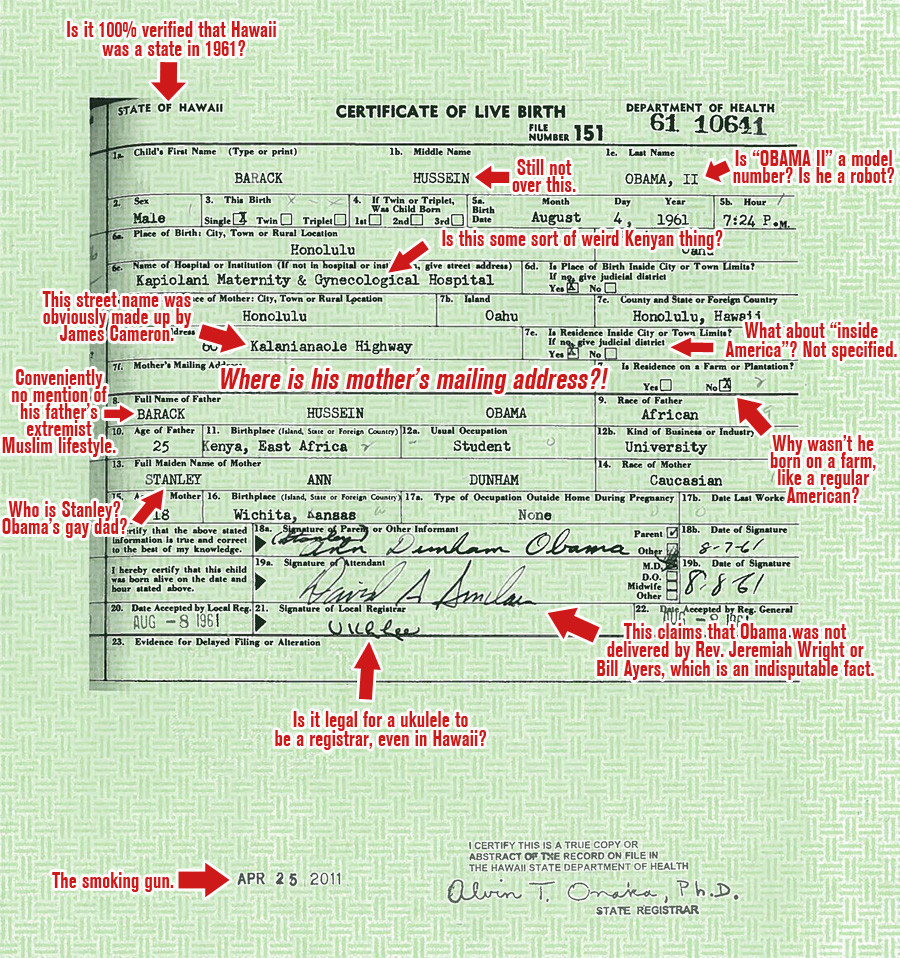
And either way, the questions in front of the beliefs may remain (again HT Mike via fb):


I guess what I'm trying to say and to convey in this post and its final paragraph is that talking honestly about deeply held perpetual beliefs of anybody who would believe that they should somehow put other people down or hold them back is sometimes mostly dangerous.  And that's why I first started using the matched-guise technique to - in some way if possible - get at, and - maybe - to allow someone some day to change, the prejudices.

Tuesday, November 25, 2008

Translation Snobs: "Saving Faith" and "Geometric Proof"

1Tim. 5:11-12
ESV But refuse to enroll younger widows, for…they desire to marry and so incur condemnation for having abandoned their former faith.
Comment: Pistis doesn’t mean “faith” here, but a pledge made to the Lord (BDAG). The ESV sounds like the widows’ remarriage results in apostasy.
TNIV …they have broken their first pledge.
NRSV …having violated their first pledge.
---
Keep that faith to yourself!
Rom. 14:22 ESV The faith that you have, keep between yourself and God.
Comment: The ESV seems to be discouraging believers from sharing their faith. But the word pistis here refers to personal convictions about food and drink, not about saving faith.6
TNIV So whatever you believe about these things keep between yourself and God.
REB If you have some firm conviction, keep it between yourself and God.
--Dr. Mark Strauss

Using an Aristotelian conception of causality which depends on distinctions between potency and act, identity of actual cause and actual effect, and the distinction between kenesis and energeia, removes apparent ambiguities and inconsistencies from Aristotle's account. For example, pistis does double duty as one of three modes of proof alongside ethos and pathos, but these three, only one of which is called pistis, are also collectively called pisteis. That "logical" source of proof is also called logos and ta pragmata. As a source of proof, pistis is a potentiality; as proof, it is actuality. The enthymeme is called the body of proof. . . . When I offer you a geometric proof, you don't have to like it, remember it, act on it; all that is necessary for my successfully performing the act of proving is that you recognize that that is what I'm doing. Proof is something I do in discourse.
--Dr. Eugene Garver
If you've made it through the two quotations above by the two Ph.D.s, Mark Strauss and Eugene Garver, then you may have noticed something. First, they are experts on the Greek word πίστις, which they both transliterate pistis. Second, they are making very clear to us naive English readers of the New Testament and of Aristotle's Rhetoric just what pistis means and should not mean in various contexts. Third, either the contexts or the two experts themselves (Strauss and Garver, both with high doctorates) will not agree on the technical meaning of pistis. For Strauss, the default prototypical meaning of pistis is "saving faith" that Christian "believers" have. For Garver, the default prototypical meaning of pistis is "geometric proof." (The sources for these quotations are Strauss's paper, "Why the English Standard Version (ESV) should not become the Standard English Version" and Garver's book, Aristotle's Rhetoric: An Art of Character.)

Do you get the problem? Two experts disputing with other experts in their respective areas of expertise the meanings of a single Greek word. Two different disputes with two very different precise results. Funny thing is, us naive English readers and the original naive Greek readers can laugh that our "belief" and their "πίστις" hardly must mean the things Dr. Strauss and Dr. Garver insist they must mean.

Just to be clear, I don't imagine for a minute that either Ph.D. is mean spirited. Rather, each thinks he's being really helpful. They each recognize that πίστις is a hugely significant term in the New Testament and in Aristotle's writings. But by narrowing down the precise or idealized meaning, they would rob us readers and translators of meaning making.

It'll take another post or two, but I think we all can think of πίστις in lots of exciting ways. Less snobbish experts like Krista Ratcliffe and Albert Einstein and Kenneth Pike and Jacqueline Jones Royster would allow any of us to view πίστις very subjectively, as wavy or like some particular thing or as a relative of sorts. I might even say that these experts would let us view the word believingly.  And I just may tell you some of my πίστις stories: of falling in love, of encountering a snake on a path, of my dog getting bit twice by a beaver near the Trinity River, and of Amelia meeting Martha Stewart two weeks ago. Maybe you'll believe me now that I have a Ph.D. --- hmmmm.

Tuesday, April 1, 2008

Why (You Can Say) I Am A Christian

Christianity is not just mental assent that certain doctrines are true--not even that the right doctrines are true. This is only the beginning. This would be rather like a starving man sitting in front of great heaps of food and saying, “I believe the food exists, I believe it's real,” and yet never eating it. It is not enough merely to say, “I am a Christian,” and then in practice to live as if present contact with the supernatural were something far-off and strange...to act as though [you] come in contact with the supernatural just twice--once when you are justified and become a Christian, and once when [you] die.
--Francis Schaeffer, Death in the City

οὐκ ἐν σοφίᾳ λόγου ἵνα μὴ κενωθῇ ὁ σταυρὸς τοῦ Χριστοῦ ὁ λόγος γὰρ ὁ τοῦ σταυροῦ τοῖς μὲν ἀπολλυμένοις μωρία ἐστίν τοῖς δὲ σῳζομένοις ἡμῖν δύναμις θεοῦ ἐστιν
--Παῦλος, τῇ ἐκκλησίᾳ τοῦ θεοῦ τῇ οὔσῃ ἐν Κορίνθῳ (1st chapter)

ἔλεγεν ἀναχωρεῖτε οὐ γὰρ ἀπέθανεν τὸ κοράσιον ἀλλὰ καθεύδει καὶ κατεγέλων αὐτοῦ ὅτε δὲ ἐξεβλήθη ὁ ὄχλος εἰσελθὼν ἐκράτησεν τῆς χειρὸς αὐτῆς καὶ ἠγέρθη τὸ κοράσιον
--ὁ Ἰησοῦς (translated by Matthew, 9:24-25)

April fool’s day is a rather special day for my daughter and me. It’s the day, a dozen years ago, that Aristotle was proven wrong about how fixed nature is. That 1st of April, she was cured of cancer, which is also something the diagnosing physicians said would be impossible. (It was an ununsually involved rare childhood liver cancer). But the Person who gave her breath to begin with is alive and is supernatural, and kindly listens to our cries for help. Today, we cry Thank You!

Monday, January 21, 2008

Martin Luther King, Jr. is no Aristotle


Behold a gluttonous man, and a winebibber, a friend of publicans and sinners!


Is not this the carpenter, the son of Mary,

the brother of James, and Joses, and of Juda, and Simon?

and are not his sisters here with us?


This fellow doth not cast out devils, but by Beelzebub the prince of the devils.

Martin Luther King, Jr. is no Aristotle. Sure, in America where we once forgot we’d fought long and hard to free ourselves from the tyrannies of slavery, he gets his day.

But King is way too subjective, too unoriginal, too fragile, too emotional, too rhetorical, too ambiguous, too dependent on the actions of his followers, too dreamy, too loving, too much willing to distract us with his too-often abused and his too-often imprisoned and his also-murdered body.

Listen to him if you dare.

Read him if you will.

Remember him if you can.

He’s one of Phillip Yancey’s unlikely teachers (with a dozen others).

He’s one of Robert E. Quinn’s extraordinary masters (with Jesus and Gandhi).

He’s Keith D. Miller’s voice of deliverance (with others whose mothers and fathers and sisters and brothers were enslaved). Listen.

Listen also because he’s Theodore Pappas’s plagiarist who’s literally no “Martin Luther” but is rather America’s progaganda minister in the culture wars.

When I first read Pappas a decade ago (before I’d read Yancey or Quinn or Miller), I decided I’d hear out King on his own terms. So I read his Letter from a Birmingham Jail and found it to be very much like the gospels of Jesus Christ. Here’s the way they’re alike: they allude to and quote and paraphrase the ideas of others (kind of like Elizabeth Cady Stanton and her friends like Frederick Douglas do with the revolutionary declarative egalitarian theological ideas of Thomas Jefferson). There are variant texts out there. I found at least three strains of the "Letter" in publication, two different versions published by King himself (one in the Atlantic Monthly of August 1963 now excerpted here on the Atlantic's web site and another revised by him and his editors for a book in which he compiles some of his writings and speech transcripts). And there are textual mistakes in the variants, both little things like misspellings and big ones in which different words and paragraphs are changed so that the texts in certain ways could well be of interest to lovers of the Q theory and fans of the lost gospels of “Jesus” and paid subscribers to J.D.E.P. except that M.L.K. Jr. won’t as quickly give them tenure or technorati ratings. And there are different versions of how the “original” letter was written down and eventually copied for publication. This should excite historians of text. But the thrilling thing is that Pappas hadn’t uncovered any of this “evidence” for his more willing, more explicit, more damning, more arrogant, more Aristotelian part in the culture wars. And I’ve sat on it silently for years now, waiting for much time to pass, telling only a few friends who understand Aristotle. We are trying to understand (with Yancey and Quinn and Miller) Jesus. And King. But we keep finding that Jesus and Martin Luther King Jr. understand us better than we’re understanding them. My humble advice after all these years is this: listen. (Listen even if it sounds like great demands on you: “change your minds” and “believe” and “love your neighbor as yourself.”)

Friday, November 30, 2007

Incarnation

I am astonished, astounded, and amazed by French feminism, by Greek rhetoric, and by Jewish translation. So I started my Christmas readings early this year.

After its incredible, presumptuous introductory gene-a-o-logy, this initial narrative startles me:

18 τοῦ δὲ ἰησοῦ χριστοῦ ἡ γένεσις οὕτως ἦν. μνηστευθείσης τῆς μητρὸς αὐτοῦ μαρίας τῶ ἰωσήφ, πρὶν ἢ συνελθεῖν αὐτοὺς εὑρέθη ἐν γαστρὶ ἔχουσα ἐκ πνεύματος ἁγίου.
19 ἰωσὴφ δὲ ὁ ἀνὴρ αὐτῆς, δίκαιος ὢν καὶ μὴ θέλων αὐτὴν δειγματίσαι, ἐβουλήθη λάθρᾳ ἀπολῦσαι αὐτήν.
20 ταῦτα δὲ αὐτοῦ ἐνθυμηθέντος ἰδοὺ ἄγγελος κυρίου κατ᾽ ὄναρ ἐφάνη αὐτῶ λέγων, ἰωσὴφ υἱὸς δαυίδ, μὴ φοβηθῇς παραλαβεῖν μαρίαν τὴν γυναῖκά σου, τὸ γὰρ ἐν αὐτῇ γεννηθὲν ἐκ πνεύματός ἐστιν ἁγίου·
21 τέξεται δὲ υἱὸν καὶ καλέσεις τὸ ὄνομα αὐτοῦ ἰησοῦν, αὐτὸς γὰρ σώσει τὸν λαὸν αὐτοῦ ἀπὸ τῶν ἁμαρτιῶν αὐτῶν.
22 τοῦτο δὲ ὅλον γέγονεν ἵνα πληρωθῇ τὸ ῥηθὲν ὑπὸ κυρίου διὰ τοῦ προφήτου λέγοντος,

23 ἰδοὺ ἡ παρθένος ἐν γαστρὶ ἕξει καὶ τέξεται υἱόν, καὶ καλέσουσιν τὸ ὄνομα αὐτοῦ ἐμμανουήλ, ὅ ἐστιν μεθερμηνευόμενον μεθ᾽ ἡμῶν ὁ θεός.
24 ἐγερθεὶς δὲ ὁ ἰωσὴφ ἀπὸ τοῦ ὕπνου ἐποίησεν ὡς προσέταξεν αὐτῶ ὁ ἄγγελος κυρίου καὶ παρέλαβεν τὴν γυναῖκα αὐτοῦ·
25 καὶ οὐκ ἐγίνωσκεν αὐτὴν ἕως οὖ ἔτεκεν υἱόν· καὶ ἐκάλεσεν τὸ ὄνομα αὐτοῦ ἰησοῦν.


Do you see it?

l' écriture feminine, Et

1:20 ἐνθυμηθέντος, καὶ

7:14 ‏לָ֠כֵן יִתֵּ֨ן אֲדֹנָ֥י ה֛וּא לָכֶ֖ם א֑וֹת הִנֵּ֣ה הָעַלְמָ֗ה הָרָה֙ וְיֹלֶ֣דֶת בֵּ֔ן וְקָרָ֥את שְׁמ֖וֹ עִמָּ֥נוּ אֵֽל׃

But just so none of us (Jew nor Greek, Hellene nor barbarian, Hélène Cixous nor man logician, slave nor free, male nor female) is offended, let's listen together. Hear. Here's another Jewish translation of that one above (Matthew's Greek translation of angel language and Hebrew translated by Willis Barnstone into our English).

18 The birth of Yeshua the Mashiah happened in this way. Miryam his mother was engaged to Yosef, yet before they came together she discovered a child in her womb, placed there by the holy spirit.
19 Yosef her husband, a just man and loath to expose her, resolved to divorce her secretly.

20 But as he was making plans, look, an angel of the Lord appeared to him in a dream an said, Yosef, son of David, do not fear to take Miryam as your wife. The child engendered in her came from the holy spirit,
21 and she will give birth, and you will name him Yeshua,for he will save his people from their wrongdoings.
22 All this was done to fulfill the word of God uttered through his prophet Yeshaya, saying,
23 "Listen. A young woman will have a child in her womb and give birth to a son, and his name will be Immanuel."
24 When Yosef rose from a dream, he did what the angel of the Lord told him, and he accepted her as his wife,

25 yet he did not know here until after she gave birth, and he called the child the name Yeshua.

Now, what if that little Greek girl were reading this to us? You know, the girl whose mother pleaded with Yeshua somehow miraculously to exorcise the deity her daughter had been given over to. (See Mark 7 or fast forward to chapter 15 in Matthew or confess a recognition of the family resemblance of this young woman to the prostituted oracles.)

Imagine that the body of this female, deflowered by proprietary pimping priests and yet unnamed in any man's history, is now freed of the demon.

Consider the possibility that she then follows after this Joshua who saves from their wrongdoings.
Suppose she's bilingual in the Hellene and the Hebrew tongues.
Suspend your disbelief that she becomes biliterate and finds her way to the libraries of Alexandria held secret from Rome in so-called dirty Egyptian mothers' cupboards.
Understand how (differently) she reads men such as Matthew translating into Greek (as above)
and men (as below) such as Isaiah and Hesiod and Homer and Aristotle.

For those who have ears to hear, overhear the sounds of her voice (as if in [y]our English):

הִנֵּה הָעַלְמָה, הָרָה וְיֹלֶדֶת בֵּן, וְקָרָאת שְׁמוֹ, עִמָּנוּ אֵל.
(see, the young woman will conceive, and bear a son, and will call his name Immanuel.)

ἰδοὺ ἡ παρθένος ἐν γαστρὶ ἕξει καὶ τέξεται υἱόν καὶ καλέσεις τὸ ὄνομα αὐτοῦ Εμμανουηλ
(see, the virgin will hold in her womb a child, and will bear a son, and will call his name Emmanouel)

ἡ δὲ γυνὴ τέτορ' ἡβώοι, πέμπτῳ δὲ γαμοῖτο.
(The young woman's four years older than puberty; wed in her fifth year.)
παρθεν-ικὴν δὲ γαμεῖν, ὥς κ' ἤθεα κεδνὰ διδάξῃς,
(While virgin-istic, she's to be married, to teach her all her respectable duties.)

καὶ διὰ παρθεν-ικῆς ἁπαλόχροος οὐ διάησιν,
(And through virgin-istic smooth-skinned maidens it cannot penetrate)

ἔνθα οἱ ἀντεβόλησε θεά, γλαυκῶπις Ἀθήνη,
(bright-eyed goddess Athena met him)
παρθενικῇ ἐϊκυῖα νεήνιδι, κάλπιν ἐχούσῃ.
(in the virgin-istic guise of a young maiden woman holding a pitcher.)

ἡ ῥητορική ἐστιν ἀντίστροφος τῇ διαλεκτικῆ
(Speaker-ism is a turn taken different from the "-ism" of talking Truth.)
. . . ἐνθυμημάτων . . . ἐστὶ σῶμα τῆς πίστεως,
(. . . inner passions . . . embody the beliefs,)


And just to help us sympathize and empathize with the inner passions (the "rhetorical enthymemes embodied in the persuasions") of this young lady, we listen to a scene described by rhetorician George A. Kennedy in his New Testament Interpretation Through Rhetorical Criticism:

The truth is immediately and intuitively apprehended because it is true. Some see it, others do not, but there is no point in trying to persuade the latter. This is the most radical form of Christian rhetoric. When Jesus performs his first miracle, the witnesses are "amazed" (1:27); they recognize truth but do not comprehend it rationally. The miracle is a sign of authority, as the crowd at once admits. No effort is made to include any picture of Jesus' early teaching as seen in the Sermon on the Mount and the Sermon on the Plain. This kind of explanation is irrelevant to Mark. When Jesus preaches in Mark it is in parables, which are directly apprehended. There are enthymemes in Mark . . . (105).

So inner passions embody beliefs, and some see it while others do not. And all too often this is the grief of the teachers and preachers and other reachers for our beliefs and our bodies. Notice how even physical bodies embody belief:

Physicist Anatol Rapoport:
Once when teaching elementary physics, I was impressed with the resistance of mature intelligent students to some fundamental facts and concepts. For example, when a man falling in a parachute has reached constant velocity, the forces action on him add up to zero. Beginners almost invariably resist this conclusion. "If there is not resultant force action on a falling body," they ask, "why does it fall?" Proof by appeal to the fundamental equation of motion is of little avail. They “believe” the equation, but they believe their preconceptions. (qtd. in Rhetoric: Discovery and Change, by Richard E. Young, Alton L. Becker, and Kenneth L. Pike, p. 239)

Philosopher Professor Dallas Willard:
Sometimes I will half jokingly say to [my 101 students] as they hand me their tests after an exam, “Did you believe what you wrote?” And they all smile. Because they know that the important thing is not to believe what you write but to write the right answers ("Truth: Can We Do Without It?" p. 12).

Rhetorician Professor Richard Young:
[Our co-taught advanced course in rhetorical argument] did not achieve its principal objective: That is, it did not appear to help students develop considered judgments on ethical problems. . . This was surprising since most of us, I think, would predict that the thinking [i.e., beliefs] of at least a few students would have changed to some significant degree. But, to my dismay, their pretests were the best predictors of their posttests. ("Toward an Adequate Pedagogy for Rhetorical Argumentation: A Case Study in Invention" p. 161).

Psychologist Professor Haim Ginott:
Dear Teacher,
I am a survivor of a concentration camp. My eyes saw what no man should witness:
Gas chambers built by learned engineers.
Children poisoned by educated physicians.
Infants killed by trained nurses.
Women and babies shot and burned by high school and college graduates.
So I am suspicious of education. My request is:
Help your students become human. Your efforts must never produce learned monsters, skilled psychopaths, educated Eichmanns.
Reading, writing, arithmetic are important only if they serve to make our children more human.
(Teacher and Child, p. 371)


Now we return to the child whose body experienced bondage beyond belief. What does she hear? What does she believe in her unbound body? What does she say?

18 τοῦ δὲ ἰησοῦ χριστοῦ ἡ γένεσις οὕτως ἦν. μνηστευθείσης τῆς μητρὸς αὐτοῦ μαρίας τῶ ἰωσήφ, πρὶν ἢ συνελθεῖν αὐτοὺς εὑρέθη ἐν γαστρὶ ἔχουσα ἐκ πνεύματος ἁγίου.
This is the birth of the Anointed, Joshua. His mother Miriam was engaged to Josef; before they came together she held in her womb a child who came by the Breath of the Special One.

19 ἰωσὴφ δὲ ὁ ἀνὴρ αὐτῆς, δίκαιος ὢν καὶ μὴ θέλων αὐτὴν δειγματίσαι, ἐβουλήθη λάθρᾳ ἀπολῦσαι αὐτήν.
Josef, her man, her husband, a just person who didn't wish to make a show of her, counseled secretly to release her from himself.

20 ταῦτα δὲ αὐτοῦ ἐνθυμηθέντος ἰδοὺ ἄγγελος κυρίου κατ᾽ ὄναρ ἐφάνη αὐτῶ λέγων,
ἰωσὴφ υἱὸς δαυίδ, μὴ φοβηθῇς παραλαβεῖν μαρίαν τὴν γυναῖκά σου, τὸ γὰρ ἐν αὐτῇ γεννηθὲν ἐκ πνεύματός ἐστιν ἁγίου·
These inner passions of his were angst. See. An announcer of the Master, in a dream, appeared to him to state:
"Josef, son of David, don't be afraid to take beside you Miriam, your woman, your wife; the baby birthed in her, in fact, is by the Breath of the Special One.

21 τέξεται δὲ υἱὸν καὶ καλέσεις τὸ ὄνομα αὐτοῦ ἰησοῦν, αὐτὸς γὰρ σώσει τὸν λαὸν αὐτοῦ ἀπὸ τῶν ἁμαρτιῶν αὐτῶν.
She will deliver a son, and you will call his name Joshua; he will, in fact, save his people from their wrongdoings."

22 τοῦτο δὲ ὅλον γέγονεν ἵνα πληρωθῇ τὸ ῥηθὲν ὑπὸ κυρίου διὰ τοῦ προφήτου λέγοντος,
These events were born out entirely so that the things spoken by the Master would be fulfilled through the Prophet who stated:

23 ἰδοὺ ἡ παρθένος ἐν γαστρὶ ἕξει καὶ τέξεται υἱόν, καὶ καλέσουσιν τὸ ὄνομα αὐτοῦ ἐμμανουήλ, ὅ ἐστιν μεθερμηνευόμενον μεθ᾽ ἡμῶν ὁ θεός.
"See, the young virgin will hold in her womb a child, and will bear a son, and will call his name Emmanouel," which is translated "With us is God."

24 ἐγερθεὶς δὲ ὁ ἰωσὴφ ἀπὸ τοῦ ὕπνου ἐποίησεν ὡς προσέταξεν αὐτῶ ὁ ἄγγελος κυρίου καὶ παρέλαβεν τὴν γυναῖκα αὐτοῦ·
When Josef got up from his sleep, he did what the announcer of the Master told him, and he took beside himself his woman, his wife.

25 καὶ οὐκ ἐγίνωσκεν αὐτὴν ἕως οὖ ἔτεκεν υἱόν· καὶ ἐκάλεσεν τὸ ὄνομα αὐτοῦ ἰησοῦν.
And he did not know her until after she delivered her son; and he called his name Joshua.