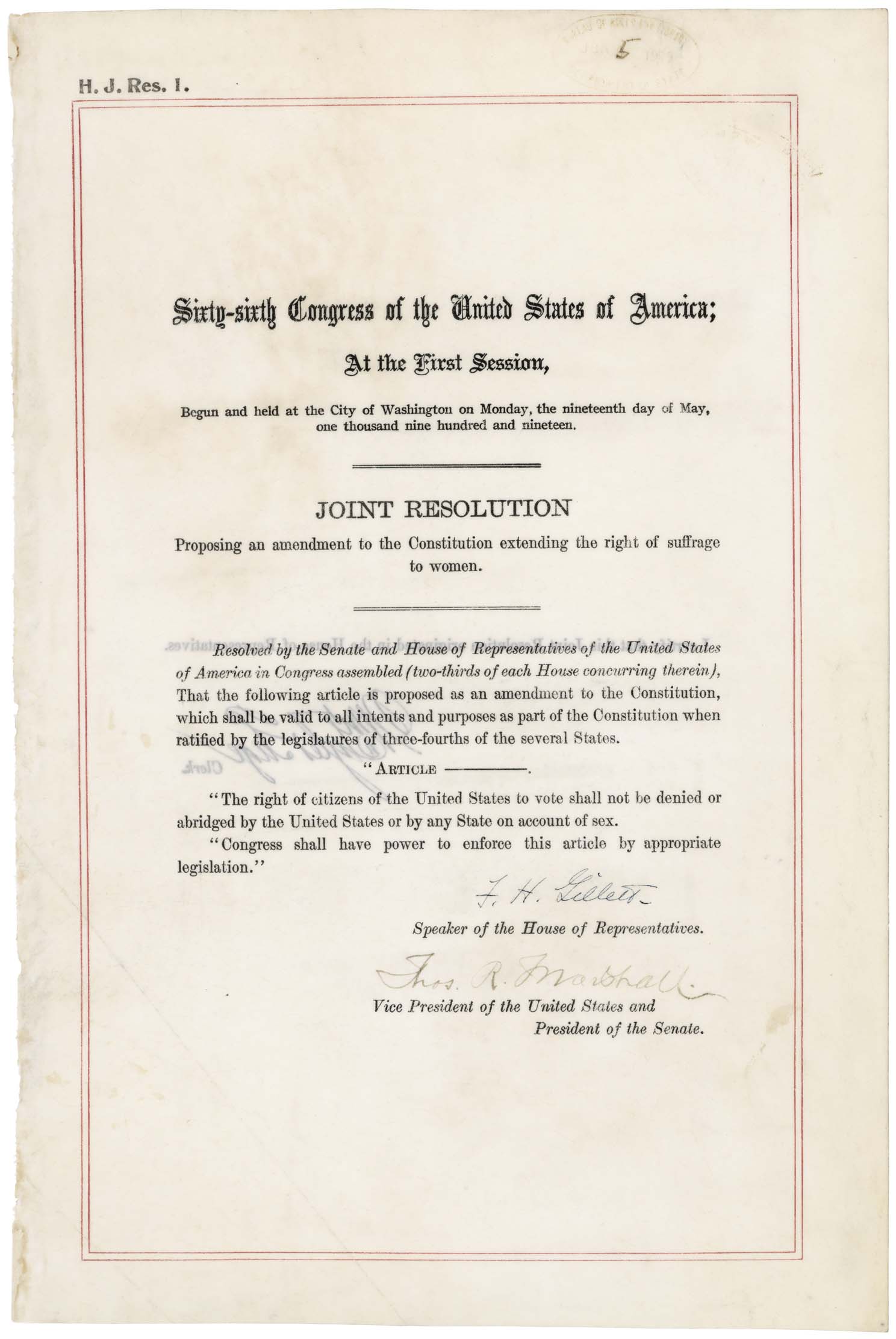
With this blogpost, I'm hoping we'll be willing to compare how we readily read
The Declaration of Independence today with how reluctantly we read
the Bible with any openness at all now. We're ready to punt the male privilege of the one text; but many of us are still much more resistant to understanding the Bible as having language that's inclusive of women as well as of men.
I almost entitled the post,
The Subtle Power of Man Exclusive Words. That title, however, is just a little too nice. Then I thought about this one:
How Man Holds His Pen is His Privilege. And yet I know some people who get the "pen is" pun will think it's just too nasty. Hence,
Visiting the Men's Room; Revisiting "the Son of Man."
Here's the blogpost outline: I.
Preface, II.
Back to the Declaration, III.
Back to the Bible, IV.
What's Next?
I. Preface
Exactly what did Thomas Jefferson mean when he penned the following words?
We hold these truths to be self-evident, that all men are created equal, that they are endowed by their Creator with certain unalienable Rights, that among these are Life, Liberty and the pursuit of Happiness.--That to secure these rights, Governments are instituted among Men, deriving their just powers from the consent of the governed
What did this mean to Martha Wayles Skelton? What could it mean for Sally Hemings, Martha's half-sister? Or to the children, Beverley and Harriet, or even Madison and Eston? What did Mr. Jefferson's words mean to Outassete? To the other Cherokees? To all of the Monacan and the Saponi and the Tutelo and the Meherrin and the Shawnee and the Miami and the Kaskaskia?
Exactly what did English Bible translators mean when they translate foreign phrases frequently as "son of man"?
The traditional “son of man” -- explains Joel Hoffman --
is a literal translation of the Hebrew ben adam
, which is how God frequently calls Ezekiel. We also find it elsewhere in the OT. In these cases, the Greek Septuagint translates the Hebrew literally as uios anthropou.
What could the male author of the Hebrew phrase mean? How about the male translators of this phrase into Greek? And what then of the male translators of the Hebrew and of the Greek into English? What do these sons of men intend?
What might this mean to Chloe Angyal, to Sindelókë, to Kristen, to Tonya, and to Jaime?
II. Back to the Declaration
When Thomas Jefferson wrote The Declaration of Independence, he did, in fact, pen the words
human,
people, and
mankind; and, of course, these are gender neutral and gender inclusive words. If you are an English-reading man or woman, you pretty much have to agree with that.
But, however, and nevertheless, the fact is that Jefferson and all the other English human people who signed that Declaration were men. They were representing their interests as "men created equal." They were not particularly interested in "mankind" as it includes women and the non-English such as Africans and Native Americans. Indeed, Jefferson himself took an English woman as his wife. He held in his possession an African woman as his slave and concubine. The two women were the daughters of another English man, the one woman being a child born to this man's English wife, the other woman being the child of this English man's African slave. None of these women were equal, or were even viewed as "created equal," with the men. The children their women produced for these men, likewise, were not "equal." The sons would only some day be equal if they were not daughters and if they were not boys tainted with African blood. And then there were the "the merciless Indian Savages," whom Jefferson writes of in the Declaration of Men. These natives to America were not considered equals. In the Preface of this blogpost, you should have recognized the names of individuals and of individual tribes of women and men and children whom the Declaration of Independence does not include in the clause, "
We hold these truths to be self-evident, that
all men are created equal."
The male privilege of the Declaration of Independence extended for many more than 100 years in the United States of America. Clearly, the women who wrote
the Declaration of Sentiments in 1848 saw how Jefferson's male-only signed Declaration excluded them. They wrote: "
We hold these truths to be self-evident: that
all men and women are created equal." And
men and women together signed this document.
And African American men were not excluded either. As a matter of fact, Frederick Douglass, one of the blacks (or one of the not whites) who signed the Declaration of Sentiments was the one who pushed for t
his controversial line: "Now, in view of this entire disfranchisement of
one-half the people of this country, their social and religious degradation, in view of the unjust laws above mentioned, and because
women do feel themselves aggrieved, oppressed, and fraudulently deprived of their most sacred rights,
we insist that they have immediate admission to all the rights and privileges which belong to
them as citizens of the United States." When Victoria Claflin Woodhull
ran for President in 1872, running alongside her as her Vice President was this same Frederick Douglass. This, of course, was just a very few years after African American men were considered by the USA to be legally whole humans, and it was just a couple of years after these particular men could vote. It was still nearly a half-century before women of any race could vote.
And the influence of Native American women and men was not excluded from the Declaration of Sentiments either. Historians
Joy Ritchie and Kate Ronald point out this influence out in their commentary on the Declaration: "Wilma Mankiller, former chief of the Cherokee Nation, notes also the important influence Native American matrilineal and matriarchal tribal structures had on emerging feminist ideas, especially since [Elizabeth Cady] Stanton and [Matilda] Gage [two of the authors of the Declaration of Sentiments] both lived in the Iroquois country of upstate New York" (page 138). The authors' inclusive Declaration finally ended with this sentence, implying a geography inclusive of all tribes of peoples: "We hope this Convention will be followed by a series of conventions embracing
every part of the country."
In the United States today, men and women of all tribes and all races are viewed as full humans, as equals. Citizens of any sex and of any race ostensibly enjoy the same Creator-endowed rights to life, liberty, and the pursuit of happiness. Even outsiders to the USA, translators of the Declaration of Independence, have no trouble using gender neutral words for Thomas Jefferson's "man." In other words, some foreign language translators seem to get better than Jefferson and his fellow English men did that "all men" really does include all who are "human" and all "people" and all of "mankind."
For example, Shakila Yacob of the University of Malaysia
has rendered "all men" as the Malaysian "semua manusia"; it's a translation that means, very inclusively, "each and every one" or "all of humankind."
Now, no natural born American should think that he or she has a more natural right to the Declaration of Independence than others. To be sure, Thomas Jefferson was not an American when he penned the Declaration. Moreover, The Declaration of Independence was not written
to you. In some ways what this means as that all of us are outsiders to this text. And yet. and yet it speaks of categories that may include or might just exclude us, depending on who we are. The funny
H. L. Mencken puts the English Declaration of Independence into "American"; and reading that foreign clause "all men are created equal" he writes it as, "you and me is as good as anybody else." Then
somebody named Tame writes this really Wild translation, "for Dummies": "God created every person equal." The point of this paragraph is that is it absolutely okay, however an outsider of the text you may be, to use gender neutral and gender inclusive language, despite what the author Thomas Jefferson intended. His race, his gender, his class, he might now just agree, is not all he could intend by "all men." You have rights. And you have rights to read. And you have rights to under-specify things such as the implied male body part.
III. Back to the Bible
If you've stayed with me so far, then you see where I'm headed, don't you? Let's now turn back to the Bible. There are these Hebrew and sometime Greek phrases in the Bible that seem man-ish. "Son of man" is one of them.
I've already bored you before with
how a son and a man like Wayne Grudem (an expert on "biblical manhood and womanhood" and
the world's leading expert on "evangelical feminism") does fault English Bible translators who make the phrases of Hebrews 2:6 not "man" and not "son of man" but, instead, gender neutral "mere mortals" and gender inclusive "human beings."
But please do notice again how for the man and the son of a man named Wayne Grudem it's a huge problem that, "The male-oriented details are erased" from the Bible with "mere mortals" and with "human beings." It the male-oriented details that matter most. This is male privilege, even in language, especially in language of the Bible, and especially for people who don't read the Hebrew or the Greek for themselves in the language of English of the translation of the Bible. The Bible was not written
to you, reminds
David Ker. Especially if you're not a man, take note that the Bible was not written by you or for you or to you or any of your kind. (Did I bore you before with how feminist-phobic David confesses to be, and did you
see questions #35 and #36?) If you're neither a man nor a son of man, well then. Tough luck.
If you are a man, as I am, then why always hold on to your male-oriented detail? Why not consider what the male privilege is like if you're just going to be a mere mortal. If you're only going to be a human being, then consider this. Consider these five cases.
Yes, 5. Then let's discuss this further, together. I know you thought we were going to go back in the discussion together to the Bible. Well, don't think we're not talking about the Bible still. Here are the 5. cases.
For him who has ears to hear, let him hear:
1.
I’m not entirely sure how easy it is to call out sexism while standing at a urinal with one’s junk in one’s hand (but if anyone could do it, Charles probably could). I know what I would have said if this conversation had taken place in front of me – and it probably wouldn’t have been terribly non-confrontational at all. But because this happened in the men’s room, and because these men probably cared a good deal more about what a fellow dude thought than what I think, what I would have said doesn’t really matter.
What matters is that in this situation, loathe though I am to admit it, Charles has more power to effect feminist change than I ever could.
--Chloe Angyal, "Overheard in the men’s room"
2.
Well. This is where things get a bit tricky to understand. Because most examples of social privilege aren’t that straightforward. Let’s take, for example, a basic bit of male privilege:
A man has the privilege of walking past a group of strange women without worrying about being catcalled, or leered at, or having sexual suggestions tossed at him.
A pretty common male response to this point is “that’s a privilege? I would love if a group of women did that to me.”
And that response, right there, is a perfect shining example of male privilege.
--Sindelókë, "On the difference between ..." (HT Kristen)
3.
Now, I’ve never taken the time to express my frustrations with these types of issues in the blogging world, mostly because it’s very easy to just ignore the comments I don’t like. If you would oblige, I would like to set the record straight. When Daniel and I started the blog it was just for fun, and it still is. We had no idea what ‘biblioblogs’ or ‘bibliobloggers’ were. We began our blog as a joint effort of two Biblical languages students to produce, no matter how informally, consistent writing on a topic we were interested in, admittedly, with limited success. All of a sudden we were part of this ‘biblioblogging’ community.
We very quickly noted that this community was very white and very male. Being from Texas this didn’t throw us off too much (even though Daniel is half non-white and I’m completely non-male) and we decided it would be fun to try to keep the posts anonymous. This (no surprise) led many, if not most, of our readers to assume that it was Daniel doing the blogging and because of him I was involved. When this comment came up I said nothing, but I should have.
The idea that a woman who collaborates with her husband on a blog (or any project) is only doing so (or has only come to the attention of others) because her husband is involved is offensive. If Daniel were not my husband but only a colleague I would be viewed in a much different light. Perhaps if I blogged on my own I would receive even more praise. Because my work is better? My ideas more interesting? Absolutely not.
--Tonya, "Guess What? Daniel is my husband."
4.
So the other day, this guy – you know, on Jersey Shore – this guy had done something stupid and it pissed off his girlfriend, so he looked at the camera and said, “What?! So now I’m frickin’ Jesus? I’m Jesus and I’m so perfect I’m not gonna look at another girl’s rack when it’s right in front of me?! Cuz I’m not perfect, and I am going to look!...I’m only human, ya know.”
Ugh! I really hate that.
I hate it when people use the fact that they're human as an excuse to be a douche.
It doesn’t even make sense. I mean, I could understand it if you were, like, ripping my arm off, for example, and I was crying and begging you to stop but you wouldn’t stop because you were, say, a tiger. Then you might say to me, “I’m sorry, but I’m only a tiger”, and I would totally have to be understanding because a tiger lives by instinct and not reason. So it would be pretty stupid of me to beg a tiger to stop hurting me, because a tiger lacks that little seen human-trait we call ‘compassion’.
But to claim that your humanity is the thing that’s keeping you from doing the right thing? That seems backwards to me. Isn’t it our humanity that compels us to treat others with kindness and respect? Isn’t it our humanness that kind of pushes us toward decency?
One of the things that I love about the Bible is that as we look into the life of Jesus we get such a clear picture of his humanity. We see Jesus celebrate and mourn, and we see him challenge injustice and cross social barriers. He is protective of the prostitute, gentle with the elderly, and compassionate toward the infirm. I like to think that during Jesus time on Earth, he was showing us a thing or two about how treat one another in this life....like, the life we’re living... right now...
--Jamie, the Very Worst Missionary, "Human, like Jesus."
5.
I understand the motivation behind “human one” in the CEB. And I think that in isolation it’s a better translation than the traditional “son of man.” But in the broader context of the full NT, I think the association with “son” is too central to give up, and so the CEB misses more than it captures.
What do you think? Which part of uios tou anthropou (“son of man” / “human one”) is more important, the meaning of the phrase or the associations of “son”?
--Joel Hoffman, "Making Jesus the 'Human One'"
If you don't get the first 4 case studies above, then you probably holding in your hand a severe case of male-oriented detail privilege.
After reading case study #1, did you get where I get the title of this post from? Please go back to that post of Chloe's if you didn't. Or re-read it carefully anyway.
After reading case study #2, are you getting the subtle abusive power of male privilege?
After reading case study #4, won't you think of a human Jesus as not having to excuse himself for his misbehavior because of douche privilege?
So, let's consider Joel's case, case #5 above. It's probably the case here that's most focused on the male words of the Bible. Joel is knocking an English Bible translation, the CEB, because it fails to make central enough the male-detailed "association with 'son'."
Joel is convinced, too, that even the Greek behind the word "man" is male-detailed only; he says elsewhere, "[W]e can look at how
anthropos is used. To the best of my knowledge, when it is specific and singular, it always refers to a specific man,
never to a specific woman" [my emphasis]. So to summarize his own position, the English "son" and the Hebrew and Greek it's translated from needs to be linked to males only; and the Greek word "anthropos" isn't used to specify a woman. (And I've already bored you with a bit of a rebuttal to that last claim,
here.) But the point is this: that male privilege calls for language to be boxed up and locked down. The male-oriented detail, the male-semantic chains of reference, all won't allow neutralization of the male-ness or the inclusion of any other, any female-ness in the cases of the Bible.
IV. What's Next?
Well, you tell me.
Some of you who've stayed with me all the way through to this final chapter (or have scrolled ahead) are just seething. "What's next? It's the slippery slope where we can't tell the gender of anybody. It's the absolute relativism by which we ignore the facts of the penis and other important biology. You're just neutralizing gender, tossing away the important male-oriented detail of Jesus Himself." Okay, I say. I've spoken quite enough today already. But isn't the detail of the race of Jesus important too? And his religion? And his class? How about his circumcision, and I'm not just specifying the details of his maleness either. What I'm saying is that his mere mortality, his glorious humanness (as Jaime writes about it) gets overlooked when the "son" part and the "man" part are all that might matter, or when those things are mainly what's emphasized (to the exclusion of a "daughter" or a "child" or "offspring"; and to the neglect of "people" and "humans" and "humankind" and "all men and women").
I'm just wondering if we can be consistent with our rules. (I've already confessed in this post that I have hurt others by my own outspoken male privilege, when I'm trying to argue for inclusion and for gender neutralizing.) So now I'm just wondering if we can be consistent with our rules. We finally want men and women, white and black and red, to be able to be equal, to be viewed as all created equal, as we read The Declaration of Independence, whether we're Thomas Jefferson or Shakila Yacob or Elizabeth Cady Stanton or Frederick Douglass or Michelle Obama or Wilma Mankiller. And yet we change the game when it comes to the Bible.
So what's next?

 Joint Resolution of Congress, 1971