Saturday, May 3, 2014


Saturday, December 21, 2013
Christian privilege
My friend in real life and blogger friend, Rod aka hOOdie_R, has been writing a lot more about white privilege. He's spoken out regularly and recently even this week "about the history of white supremacy as a worldwide system." The activism, the confrontation of and dismantling of privilege that is systemic can be tricky, he notes.
“In spite of our activism, we benefit from global economic structures of oppression,” he quotes womanist and relational theologian Karen Baker-Fletcher as saying. And there are layers of benefits from the system and structures, because one finds oneself participating in it and in them. Privilege is relative. Whiteness benefits those who claim it, and those who can ride its coat tails. And so hOOdie_R finds himself, with his own male privilege that he confesses, quoting this woman at length. She finds herself saying with profound humility in her essay, “A Womanist Journey,” these things:
I'm writing this post because I'm up at night. I'm up anyways and reading Rachel Held Evans's latest blog-guest post by Marlena Graves, who self identifies in public as "a Spanish-speaking Hispanic woman."
Ms. Graves is up at night, kept up. And it's another self-identity that keeps her up. This is tricky, I must write. Like white privilege, it's Christian privilege.
Now, let me quickly self identify. You, dear reader, must know where I'm coming from. And do know where you're reading from.
I'm a cis hetero sexual white male able-bodied homosapien. I find myself most waking moments of most days a theist with trinitarian leanings because I appreciate a kind kind of god if i have to have one, since I have to, and a transcendent one may just be the immanent one who is the kindest sort of homosapien. I could have just used the loaded term "incarnation." but i like Greek based English more than latin based english, even though I hate the word Christian. (I do appreciate the Bible very much, and yet I confess that others have influenced that very very much, which my blogger friend Suzanne has called "very feminist.")
Identities fascinate me, especially when they're self identities. So what are yours? I hate them when they're systemically imposed. Have any of those?
Well, let's get to Christian privilege. I think it's what Ms. Graves is struggling with. Before we get right into what she says keeps her up at night, let me just remind that Ms. Graves is one who finds white male Christian pastors like Mark Driscoll useful individuals to consult as she gives her own Christianity Today advice to Christian women about female masturbation. I am not just trying to shock you, dear reader, with sex. I know it's a sensationalist sort of thing to do to bring attention to that. And yet do see here how layered and woven together these systems of ideas might just be. Sex is powerful. Whiteness is powerful. Christianity is powerful.
And Ms. Graves struggles as she explains to Christian readers of Rachel Held Evans's blog why she fasted for families:
Would she have supported Andrew Jackson’s Indian Removal policy as a Christian? Notice what's implicit in this question: Christian privilege. There's no recognition here that somebody like Galagi’na Watie, a Cherokee also named Elias Boudinot, might have been also Christian as he initially vehemently spoke against the removal. But what's being Christian have to do with this sort of activism. Ms. Graves is not identifying with Mr. Watie aka Mr. Boudinot in any way.
Would she have been an abolitionist and then an opponent of the Jim Crow laws? Clearly she's not an enslaved person because of her race. Obviously she would not have lost anything being a white hispanic due to the American racist law. Does Christian privilege allow her to be an activist then? The presumption is that Christians have the choice here about whether to act or not. The presumption is that most Christians were not blacks enslaved, or if they were African Americans who were also Christians in the minority, then they had a choice to be happy with the law and a choice not to sing the blues (as the Duck Dynasty patriarch so infamously has insinuated by his "coarse" explanations of his Christian privilege, to which he's entitled, as a white man in America).
Would she have hidden the Jews? Like Corrie Ten Boom? Like all those who kept the Franks safe as long as they could in the Achterhuis? This is a question for non-Jewish Christians? Like it was for say Dietrich Bonhoeffer? Christian privilege allows this? This sort of opt in or out of social justice? This sort of need to explain one's own activism, to other Christians, on Christian blogs? As if it's more about one's Christian identity than it is about racist horrors against individuals, millions upon millions?
She wonders at night in this nation where there's a holiday in the first month of every new year to honor Martin Luther King, Jr. and his leadership and his activism. Wasn't he a Christian? Yes, and she acknowledges him so as her brother with "my other brothers and sisters." King was constantly calling out the white Christians, the white Christian pastors and leaders, who failed to work for the civil rights of all. And yet there is the Christian privilege that asks, that possesses the very privilege to ask, "Or would I take my cue from those in the church who opposed them?"
I'm encouraged by the conversations, by my friends, by Rod aka hOOdie_R to examine my own self. To examine the systems that I identify with or am caught in even caught up in. My privilege requires, to use a Christian phrase, my repentance.
“In spite of our activism, we benefit from global economic structures of oppression,” he quotes womanist and relational theologian Karen Baker-Fletcher as saying. And there are layers of benefits from the system and structures, because one finds oneself participating in it and in them. Privilege is relative. Whiteness benefits those who claim it, and those who can ride its coat tails. And so hOOdie_R finds himself, with his own male privilege that he confesses, quoting this woman at length. She finds herself saying with profound humility in her essay, “A Womanist Journey,” these things:
Sexism, racism, classism, heterosexism, ableism, and ecological destruction are interrelated systems of oppression in womanist understanding.... The masses of black women in the United States work in the lowest paying jobs and struggle to feed their children. They have not benefited from higher education with its economic opportunities. Middle-class womanists in academia, like myself, experience less economic oppression than many poor black women in the United States and abroad. [my emphasis]I do hope you've stayed with me so far. Maybe my title has piqued your interest as I talk at first about hOOdie_R's writings about white privilege.
I'm writing this post because I'm up at night. I'm up anyways and reading Rachel Held Evans's latest blog-guest post by Marlena Graves, who self identifies in public as "a Spanish-speaking Hispanic woman."
Ms. Graves is up at night, kept up. And it's another self-identity that keeps her up. This is tricky, I must write. Like white privilege, it's Christian privilege.
Now, let me quickly self identify. You, dear reader, must know where I'm coming from. And do know where you're reading from.
I'm a cis hetero sexual white male able-bodied homosapien. I find myself most waking moments of most days a theist with trinitarian leanings because I appreciate a kind kind of god if i have to have one, since I have to, and a transcendent one may just be the immanent one who is the kindest sort of homosapien. I could have just used the loaded term "incarnation." but i like Greek based English more than latin based english, even though I hate the word Christian. (I do appreciate the Bible very much, and yet I confess that others have influenced that very very much, which my blogger friend Suzanne has called "very feminist.")
Identities fascinate me, especially when they're self identities. So what are yours? I hate them when they're systemically imposed. Have any of those?
Well, let's get to Christian privilege. I think it's what Ms. Graves is struggling with. Before we get right into what she says keeps her up at night, let me just remind that Ms. Graves is one who finds white male Christian pastors like Mark Driscoll useful individuals to consult as she gives her own Christianity Today advice to Christian women about female masturbation. I am not just trying to shock you, dear reader, with sex. I know it's a sensationalist sort of thing to do to bring attention to that. And yet do see here how layered and woven together these systems of ideas might just be. Sex is powerful. Whiteness is powerful. Christianity is powerful.
And Ms. Graves struggles as she explains to Christian readers of Rachel Held Evans's blog why she fasted for families:
There are nights when I lie awake wondering about what sort of Christian I really am.Notice that Ms. Graves is self identifying as Christian. She's the sort of Christian blogger who is now an apologist for activism. This allows her to wear her other self identity "hispanic woman," which is not the one she usually has to wear around Christians. At her own blog she's "a lover of beauty" and "a justice seeker" and an answer seeker and married to a man and mother to their children and a reader (with 14 favorite authors who are all Christians, save perhaps poet Mary Oliver).
I mean, there’s the Christian I think I am and then the kind I actually am. When push comes to shove, would I have supported Andrew Jackson’s Indian Removal policy and the subsequent ethnic cleansing that occurred as we made our way from sea to shining sea? Would I have been an abolitionist, actively and publicly standing against slavery and then voicing strong opposition to the eminently wicked Jim Crow laws that ensued after the Civil War? Am I the type who would’ve hidden the Jews during the Holocaust? These nights I wonder if I would’ve labored for civil rights, standing in solidarity with Martin Luther King Jr. and my other brothers and sisters. Or would I take my cue from those in the church who opposed them?
Would she have supported Andrew Jackson’s Indian Removal policy as a Christian? Notice what's implicit in this question: Christian privilege. There's no recognition here that somebody like Galagi’na Watie, a Cherokee also named Elias Boudinot, might have been also Christian as he initially vehemently spoke against the removal. But what's being Christian have to do with this sort of activism. Ms. Graves is not identifying with Mr. Watie aka Mr. Boudinot in any way.
Would she have been an abolitionist and then an opponent of the Jim Crow laws? Clearly she's not an enslaved person because of her race. Obviously she would not have lost anything being a white hispanic due to the American racist law. Does Christian privilege allow her to be an activist then? The presumption is that Christians have the choice here about whether to act or not. The presumption is that most Christians were not blacks enslaved, or if they were African Americans who were also Christians in the minority, then they had a choice to be happy with the law and a choice not to sing the blues (as the Duck Dynasty patriarch so infamously has insinuated by his "coarse" explanations of his Christian privilege, to which he's entitled, as a white man in America).
Would she have hidden the Jews? Like Corrie Ten Boom? Like all those who kept the Franks safe as long as they could in the Achterhuis? This is a question for non-Jewish Christians? Like it was for say Dietrich Bonhoeffer? Christian privilege allows this? This sort of opt in or out of social justice? This sort of need to explain one's own activism, to other Christians, on Christian blogs? As if it's more about one's Christian identity than it is about racist horrors against individuals, millions upon millions?
She wonders at night in this nation where there's a holiday in the first month of every new year to honor Martin Luther King, Jr. and his leadership and his activism. Wasn't he a Christian? Yes, and she acknowledges him so as her brother with "my other brothers and sisters." King was constantly calling out the white Christians, the white Christian pastors and leaders, who failed to work for the civil rights of all. And yet there is the Christian privilege that asks, that possesses the very privilege to ask, "Or would I take my cue from those in the church who opposed them?"
I'm encouraged by the conversations, by my friends, by Rod aka hOOdie_R to examine my own self. To examine the systems that I identify with or am caught in even caught up in. My privilege requires, to use a Christian phrase, my repentance.
Tuesday, December 4, 2012
Exceptional and Exceptionalism: Recovery from Sexism Yet to Do
I'm back on this blog today for two reasons. First and foremost, it seems we must all be aware of our ever-needed recovery from sexism, and so you'll pardon me if I point out the perpetual and present problem. Second, I'd like to respond briefly to an honor bestowed on this blog.
First, then.
You may have read that César A. Hidalgo has led M.I.T. in research that "reveals the world's most influential people, born before 1950, using data from all language editions of Wikipedia." Hidalgo declares: "It shows you how the world perceives your own national culture. It's a socio-cultural mirror."
What the research ostensibly has shown is that those who have most exceptionally influenced us and our culture are exclusively men. Here are the "people," the men only, who comprise "the Top 20" (as posted by reporter and elsewhere by reporter Kerry Mcdermott):
1. Jesus Christ: Prophet and central figure of Christianity
2. Confucius: Chinese philosopher
3. Sir Isaac Newton: British physicist
4. Gandhi: Indian politician and activist
5. Albert Einstein: German physicist
6. Aristotle: Greek philosopher
7. Vasco da Gama: Portuguese explorer
8. Leonardo da Vinci: Italian artist
9. Plato: Greek philosopher
10. Archimedes: Greek philosopher
11. Mao Zedong: Chinese communist revolutionary
12. William Shakespeare: English playwright
13. Socrates: Greek philosopher
14. Karl Marx: German philosopher and socialist
15. Michaelangelo: Italian sculptor
16. Gautama Buddha: Nepalese spiritual teacher
17. Nelson Mandela: South African politician
18. Galileo Galilei: Italian physicist
19. Julius Caesar: Roman emperor
20. Joseph Stalin: Soviet leader
So all men. No women. This is what the "research into how culture 'assembles itself'" has shown us. So what does that say about us? And which of these top 20"people" men are egalitarians, anti-sexists, feminist allies, or outright feminists?
And which of these men have influenced our world and our places to leave women and females and girls out? Which of these 20 most influential men of all time have put girls down in positions under men and males and boys? Which of these men have silenced the influence of women around them? At this blog, I've tried to show that Aristotle has been a huge early and everlasting influencer in this regard.
So, second.
This blog has shown up again on a list where women have regularly (and thankfully more so in the past) been excluded. I'm talking about "The Biblioblog Top 50." My friend Rod at Political Jesus has joined with others to call for change, for a move to make more room for women in this exceptional (but too often exceptionalistic group of mostly men); see his post: Can The Subaltern Blog? Part 2: Theology Studio, Gender, And The Rhetoric of “Dialogue” And at BLT where I've been blogging, there was the saracastic note of “The End of Men” in the Biblical Studies Carnival, since sometimes even women join men in putting females down.
Today, this blog received an honor, another distinction. It speaks to influence perhaps, to coming alongside others in the world of blogging to try to recover the creative and created gendered equality that Genesis 1:27 and that Galatians 3:28 speak about.
I want to thank those giving out the badges to be posted for recognizing the purposes of Aristotle's Feminist Subject. And I more want to show that the honor goes not just to men but to women also! For example, in the Exceptional List there are these noted websites that are clearly authored by women:
Fifteen of the One Hundred in the list are clearly women-authored sites. It's an honor, then, to have this blog be awarded with these.

First, then.
You may have read that César A. Hidalgo has led M.I.T. in research that "reveals the world's most influential people, born before 1950, using data from all language editions of Wikipedia." Hidalgo declares: "It shows you how the world perceives your own national culture. It's a socio-cultural mirror."
What the research ostensibly has shown is that those who have most exceptionally influenced us and our culture are exclusively men. Here are the "people," the men only, who comprise "the Top 20" (as posted by reporter and elsewhere by reporter Kerry Mcdermott):
1. Jesus Christ: Prophet and central figure of Christianity
2. Confucius: Chinese philosopher
3. Sir Isaac Newton: British physicist
4. Gandhi: Indian politician and activist
5. Albert Einstein: German physicist
6. Aristotle: Greek philosopher
7. Vasco da Gama: Portuguese explorer
8. Leonardo da Vinci: Italian artist
9. Plato: Greek philosopher
10. Archimedes: Greek philosopher
11. Mao Zedong: Chinese communist revolutionary
12. William Shakespeare: English playwright
13. Socrates: Greek philosopher
14. Karl Marx: German philosopher and socialist
15. Michaelangelo: Italian sculptor
16. Gautama Buddha: Nepalese spiritual teacher
17. Nelson Mandela: South African politician
18. Galileo Galilei: Italian physicist
19. Julius Caesar: Roman emperor
20. Joseph Stalin: Soviet leader
So all men. No women. This is what the "research into how culture 'assembles itself'" has shown us. So what does that say about us? And which of these top 20
And which of these men have influenced our world and our places to leave women and females and girls out? Which of these 20 most influential men of all time have put girls down in positions under men and males and boys? Which of these men have silenced the influence of women around them? At this blog, I've tried to show that Aristotle has been a huge early and everlasting influencer in this regard.
So, second.
This blog has shown up again on a list where women have regularly (and thankfully more so in the past) been excluded. I'm talking about "The Biblioblog Top 50." My friend Rod at Political Jesus has joined with others to call for change, for a move to make more room for women in this exceptional (but too often exceptionalistic group of mostly men); see his post: Can The Subaltern Blog? Part 2: Theology Studio, Gender, And The Rhetoric of “Dialogue” And at BLT where I've been blogging, there was the saracastic note of “The End of Men” in the Biblical Studies Carnival, since sometimes even women join men in putting females down.
Today, this blog received an honor, another distinction. It speaks to influence perhaps, to coming alongside others in the world of blogging to try to recover the creative and created gendered equality that Genesis 1:27 and that Galatians 3:28 speak about.
I want to thank those giving out the badges to be posted for recognizing the purposes of Aristotle's Feminist Subject. And I more want to show that the honor goes not just to men but to women also! For example, in the Exceptional List there are these noted websites that are clearly authored by women:
Art by Stacy Lee
A Christian Worldview of Fiction
Christian Mom Book Review
Reading to Know
Alise…Write!
Susan J Reinhardt
Her.meneutics
Jeannie’s Daily Bible Verse Blog
BLT (where my co-blogger's Suzanne and Victoria also blog with Theophrastus and Craig Smith and me )
Stray Thoughts
girltalkhome
The Christian Woman
Black, White, and Gray (where Margarita Mooney and sometimes Becky Hsu and Amy Reynolds also blog with a few others)
Tentmaker (where Gary and Michelle Amirault and friends write)
The Forbidden Gospels (where April DeConick, author of Holy Misogyny: Why the Sex and Gender Conflicts in the Early Church Still Matter, blogs and has written much there about the exceptional exclusion of women from lists of bible blogging)
Fifteen of the One Hundred in the list are clearly women-authored sites. It's an honor, then, to have this blog be awarded with these.
This blog has been a way to interact with some of you around "subjects" that Aristotle has taught too many of us in the West, even today, to disparage: females, rhetoric, and translation. Much recovery yet to do.
Thursday, May 3, 2012
mainly blogging at BLT
This is just a quick note. I’m mainly blogging elsewhere for now:
http://bltnotjustasandwich.com
(And I don't yet twitter in any lovely way, JazzFest. Do you?)
http://bltnotjustasandwich.com
(And I don't yet twitter in any lovely way, JazzFest. Do you?)
Tuesday, October 25, 2011
What the new book by David Bellos offers (and promises)
It's rare to find a book on translation that gets at many different issues. Some of my favorite books on the topic are these:
The Routledge Encyclopedia of Translation Studies, (2nd ed), edited by Mona Baker and Gabriela Saldanha
The Poetics of Translation: History, Theory, Practice, by Willis Barnstone
Faithful Renderings: Jewish-Christian Difference and the Politics of Translation (Afterlives of the Bible), by Naomi Seidman
Gender in Translation: Cultural Identity and the Politics of Transmission, by Sherry Simon
After Babel: Aspects of Language and Translation, by George Steiner
The Translation Studies Reader, (2nd ed), by Lawrence Venuti
Language in Relation to a Unified Theory of the Structure of Human Behavior by Kenneth L. Pike
And now
Is That a Fish in Your Ear?: Translation and the Meaning of Everything, by David Bellos
At BLT, I've written a review of the Bellos book. He kindly replied there to acknowledge he'd given Olympe de Gouges the short shrift and to promise that he was correcting that in the French edition due out in January and in the English paperback version to become available eventually.
Also at BLT, quoting Bellos, I've added to the series on Eugene Nida that I began here, and here, here, and here.
The Routledge Encyclopedia of Translation Studies, (2nd ed), edited by Mona Baker and Gabriela Saldanha
The Poetics of Translation: History, Theory, Practice, by Willis Barnstone
Faithful Renderings: Jewish-Christian Difference and the Politics of Translation (Afterlives of the Bible), by Naomi Seidman
Gender in Translation: Cultural Identity and the Politics of Transmission, by Sherry Simon
After Babel: Aspects of Language and Translation, by George Steiner
The Translation Studies Reader, (2nd ed), by Lawrence Venuti
Language in Relation to a Unified Theory of the Structure of Human Behavior by Kenneth L. Pike
And now
Is That a Fish in Your Ear?: Translation and the Meaning of Everything, by David Bellos
At BLT, I've written a review of the Bellos book. He kindly replied there to acknowledge he'd given Olympe de Gouges the short shrift and to promise that he was correcting that in the French edition due out in January and in the English paperback version to become available eventually.
Also at BLT, quoting Bellos, I've added to the series on Eugene Nida that I began here, and here, here, and here.
Saturday, October 8, 2011
Who's your daddy? Aristotle or Moses? And why not ask who your mother is?
Harold Bloom's name has come up three times now at the blog BLT. The first time, we found Bloom praising the King James Version of the Hebrew Bible especially and praising Herbert Marks for being the foremost literary critic of the KJV. The second time, we discovered Bloom meditating on the many places English translators in translating have bettered the Hebrew Bible and have improved on the aesthetics of the Greek of the New Testament. And most recently, we saw Bloom recognizing how Willis Barnstone, in particular, has with unparalleled eloquence restored the New Testament as a Jewish text.
Now, I want to consider Bloom's line of thinking. How he has much to say about your thinking and mine! Especially when we start reading a text, the Bible for example, we show our tendencies to follow others in their thinking. Our epistemologies, whether we know it or not, derive from and descend down from and are developed by others, Bloom argues.
Now, immediately, you will want to be defensive. I feel the same way. Likewise, Thomas Ferrell seems defensive. But Ferrell is also grateful, is open to what Bloom has to say. Ferrell is very different from Bloom; Ferrell is a historian but a rhetoric scholar not a literary critic, like Bloom. Ferrell is Catholic; Bloom Jewish. And Ferrell, about Bloom, says this:
Now, I hope you see what I'm trying to do. Whether you are Catholic or Jewish or a-religious, I'm trying to get you, and me, to consider what Bloom sees. You cannot read Bloom, moreover, without taking what he says personally. Bloom gets us looking at who our influences are, and how those influences may have influenced us. And how they might influence us later today, or tomorrow, or next week, or next month, or next year. Another important question is who these influences are: "Who's your daddy? Aristotle or Moses or Yahweh or Jesus?" And why not ask who your mother is? Bloom says when you read the Hebrew Bible you might want to ask.
So, without further ado, here's Harold Bloom again:
"Whoever you are, you identify necessarily the origins of your self more with Augustine, Descartes, and John Locke, or indeed with Montaigne and Shakespeare, than you do with Yahweh and Jesus. That is only another way of saying that Socrates and Plato, rather than Jesus, have formed you, however ignorant you may be of Plato. The Hebrew Bible dominated seventeenth-century Protestantism, but four centuries later our technological and mercantile society is far more the child of Aristotle than of Moses."
--Harold Bloom, Jesus and Yahweh: The Names Divine, 2005, page 146
"Frequently we forget one reason why the Hebrew Bible is so difficult for us: our only way of thinking comes to us from the ancient Greeks, and not from the Hebrews. No scholar has been able to work through a persuasive comparison of Greek thinking and Hebrew psychologizing, if only because the two modes themselves seem irreconcilable."
--Harold Bloom, Ruin the Sacred Truths: Poetry and Belief from the Bible to the Present, 1991, page 27
"[T]he first author of the Hebrew Bible, the figure named the Yahwist or J by nineteenth biblical scholarship (the "J" from the German spelling of the Hebrew Yahweh, or Jehovah in English, the result of a onetime spelling error) . . ., like Homer, a person or persons lost in the recesses of time, appears to have lived in or near Jerusalem some three thousand years ago, well before Homer either lived or was invented. Just who the primary J was, we are likely never to know. I speculate, on purely internal and subjective literary grounds, that J may well have been a woman at King Solomon's court, a place of high culture, considerable religious skepticism, and much psychological sophistication."
--Harold Bloom, The Western Canon: The Books and School of the Ages, 1994, page 4
Now, I want to consider Bloom's line of thinking. How he has much to say about your thinking and mine! Especially when we start reading a text, the Bible for example, we show our tendencies to follow others in their thinking. Our epistemologies, whether we know it or not, derive from and descend down from and are developed by others, Bloom argues.
Now, immediately, you will want to be defensive. I feel the same way. Likewise, Thomas Ferrell seems defensive. But Ferrell is also grateful, is open to what Bloom has to say. Ferrell is very different from Bloom; Ferrell is a historian but a rhetoric scholar not a literary critic, like Bloom. Ferrell is Catholic; Bloom Jewish. And Ferrell, about Bloom, says this:
The Testimony of Harold Bloom
Harold Bloom is a [USA] national treasure to be cherished. I have always benefited from reading his books, even when I have found particular points to disagree with. In my discussion below, my disagreements with particular points that Bloom makes are highlighted. Despite my explicit disagreements, I am enormously thankful to Professor Bloom for having the courage of his convictions to say the very things with which I happen to disagree. If he had not said these things, then I could not disagree with him about them. For this reason, I am abundantly grateful to him for stimulating me to think about the very points with which I disagree. He has served as an excellent foil against which I have developed my own thinking about certain matters.
Now, I hope you see what I'm trying to do. Whether you are Catholic or Jewish or a-religious, I'm trying to get you, and me, to consider what Bloom sees. You cannot read Bloom, moreover, without taking what he says personally. Bloom gets us looking at who our influences are, and how those influences may have influenced us. And how they might influence us later today, or tomorrow, or next week, or next month, or next year. Another important question is who these influences are: "Who's your daddy? Aristotle or Moses or Yahweh or Jesus?" And why not ask who your mother is? Bloom says when you read the Hebrew Bible you might want to ask.
So, without further ado, here's Harold Bloom again:
"Whoever you are, you identify necessarily the origins of your self more with Augustine, Descartes, and John Locke, or indeed with Montaigne and Shakespeare, than you do with Yahweh and Jesus. That is only another way of saying that Socrates and Plato, rather than Jesus, have formed you, however ignorant you may be of Plato. The Hebrew Bible dominated seventeenth-century Protestantism, but four centuries later our technological and mercantile society is far more the child of Aristotle than of Moses."
--Harold Bloom, Jesus and Yahweh: The Names Divine, 2005, page 146
"Frequently we forget one reason why the Hebrew Bible is so difficult for us: our only way of thinking comes to us from the ancient Greeks, and not from the Hebrews. No scholar has been able to work through a persuasive comparison of Greek thinking and Hebrew psychologizing, if only because the two modes themselves seem irreconcilable."
--Harold Bloom, Ruin the Sacred Truths: Poetry and Belief from the Bible to the Present, 1991, page 27
"[T]he first author of the Hebrew Bible, the figure named the Yahwist or J by nineteenth biblical scholarship (the "J" from the German spelling of the Hebrew Yahweh, or Jehovah in English, the result of a onetime spelling error) . . ., like Homer, a person or persons lost in the recesses of time, appears to have lived in or near Jerusalem some three thousand years ago, well before Homer either lived or was invented. Just who the primary J was, we are likely never to know. I speculate, on purely internal and subjective literary grounds, that J may well have been a woman at King Solomon's court, a place of high culture, considerable religious skepticism, and much psychological sophistication."
--Harold Bloom, The Western Canon: The Books and School of the Ages, 1994, page 4
Friday, October 7, 2011
2 Feminist Critiques: Systemic Attention Paid to "Men vs. Women" Research, Statistics, and Sexist Conclusions
Here are some "conclusions from [USA] national data ... supported by research at ... the College of St. Benedict, and at Saint John's University":
MaryAnn Baenninger, President of the College of St. Benedict, speaks out to critique the former. (She is well aware of the American Council on Education report that "The percentage of [US college] presidents who were women more than doubled, from 10 percent in 1986 to 23 percent of the total in 2006, but women's progress has slowed in recent years" so that in 2011 "about 25 percent of college presidents are women.") She says, "Clearly, our conclusions about gender must be nuanced, and we would be wise to suspend assumptions about whether women or men are doing better or worse." See her wonderful wisdom here.
And Theophrastus, a blogger and "a professor at a US university with strong interests in applied issues in linguistics," speaks out to critique Bennett. Theophrastus says, "Bill Bennett’s article claims to be about the emasculation of American men and the need to 'empower' them. But clearly, his ultimate motivation has to do more with the domestication of American women." See the brilliant critique here at BLT.
- Women underestimate their abilities and express lower levels of self-confidence than their abilities suggest. Men overestimate their abilities and express higher levels of confidence than their abilities warrant. This difference arrives with them as first-year students and leaves with them as seniors.
- Men in college spend significantly more time in leisure activities (especially, for example, video-game play and athletic pursuits) than do women. College women are hyper-scheduled participants in co-curricular activities.
- Women have higher GPA's than do men—when they enter and leave college—even when the sexes show equivalent aptitude on standardized tests.
- For the first time in history, women are better educated, more ambitious and arguably more successful than men.
- The Founding Fathers believed, and the evidence still shows, that industriousness, marriage and religion are a very important basis for male empowerment and achievement.
- If you don’t believe the numbers, just ask young women about men today. You will find them talking about prolonged adolescence and men who refuse to grow up.
- In 1970, men earned 60% of all college degrees. In 1980, the figure fell to 50%, by 2006 it was 43%. Women now surpass men in college degrees by almost three to two.
- In 1950, 5% of men at the prime working age were unemployed. As of last year, 20% were not working, the highest ever recorded.
- Men are also less religious than ever before. According to Gallup polling, 39% of men reported attending church regularly in 2010, compared to 47% of women.
MaryAnn Baenninger, President of the College of St. Benedict, speaks out to critique the former. (She is well aware of the American Council on Education report that "The percentage of [US college] presidents who were women more than doubled, from 10 percent in 1986 to 23 percent of the total in 2006, but women's progress has slowed in recent years" so that in 2011 "about 25 percent of college presidents are women.") She says, "Clearly, our conclusions about gender must be nuanced, and we would be wise to suspend assumptions about whether women or men are doing better or worse." See her wonderful wisdom here.
And Theophrastus, a blogger and "a professor at a US university with strong interests in applied issues in linguistics," speaks out to critique Bennett. Theophrastus says, "Bill Bennett’s article claims to be about the emasculation of American men and the need to 'empower' them. But clearly, his ultimate motivation has to do more with the domestication of American women." See the brilliant critique here at BLT.
Friday, September 30, 2011
blame the Jews (not the Korinthians or the Romans)?: Paul and that slogan, again
Dennis J. Preato has listed three options for reading what Paul wrote to an Assembly in Korinth, Greece. Preato states (with my emphases):
The Second option is entirely possible, but even if it's the case that Paul didn't write what's written, then whoever did add the verses really did want to sound like Paul. Supposing this doesn't at all solve the problem of whether the "Pauline" statement is ultimately (1) to silence women or (2) whether it's to rebuke men who are silencing women. The interpolater was either pretending to be Paul forbidding women from speaking. Or he was pretending to be Paul rebuking men who were forbidding women from speaking. So we still have our decision to make: (1) Are the readers to take what's written as regulating and restricting the behavior of women? (2) Or can the readers take this epistle to mean that women are as free to speak as men?
So we turn to the First (and Fourth) option(s). Is Paul (or is Torah) forbidding women?
This set of options -- that would make Paul (or Torah) forbid women in Korinth from speaking -- makes for some strange bedfellows. The strange group, for example, includes these:
The Bible.org people have this footnote on the verses:
In contrast, Barnstone is very much a feminist ally, writing a pro-woman essay "The Role of Silent Women" within his commentary on Paul (see pages 628-30 of his Restored New Testament); Barnstone makes clear, likewise, that Paul was pro-woman, if he did contradict himself sometimes by looking to "earlier [religious] . . . hierarchies":
So we turn to the Third (and Fifth) option(s). Is Paul rebuking sexist men by quoting back to them their rabbinic slogan, or Korinthian slogan, or Roman slogan?
Maybe it is an oral rabbinic slogan. If so, this gets at least Barnstone thinking that Paul sounds like he's quoting "earlier Jewish temple customs" and is thereby contradicting himself. But Paul is only contradicting himself if he agrees with such a slogan or endorses following such sexist customs. And, as Barnstone shows, Paul's own customs were very pro-woman. Why not consider that Paul might be actually quoting back to Korinthian men some slogan they were repeating to him?
Translator Ann Nyland does consider this. She notes how S. Aalen has claimed there's "A Rabbinic Formula in 1 Cor. 14,34" (see, Texte und Untersuchungen zur Geschichte der altchristlichen Literatur 87 [1964] 513-25). And Ann Nyland cites a later version of Aalen's paper to suggest, "The language in the quotation resembles known Jewish oral law" (page 330, The Source New Testament With Extensive Notes On Greek Word Meaning).
Maybe it is a Korinthian slogan, and not really a Jewish one. This, to me, seems much more plausible. When Paul writes the Philippoi (the men and women) in Philippi, Greece, he is very clear and explicit when he contradicts "old Jewish customs" (Philippians 3:5). He's more likely rebuking the men in Korinth concerning a slogan that is NOT Jewish. If I were a Bible commentator, or the writer of the footnote on I Corinthians 14:34-35, then I'd probably read the Greek there and blame it on Aristotle. Paul seems to be considerably influenced by Aristotle. Whether it's considering women differently from and as naturally ordered under men; whether it's their unique use of "logic"; whether it's their ideals for the marriage ages of husbands and their women or the ideals of whether to marry at all or their understanding of the naturalness of male baldness and of female hair length -- Paul appears to agree with Aristotle.
Well, you could probably convince me, instead, to blame it on some other Greek man. You could probably tell me Paul was quoting a sexist Greek slogan to the men in Korinth. You might even convince me that Paul was even quoting this woman disparaging slogan right back at them, to rebuke them. After all, men in Greece have this gyne-phobic and misogynistic legacy. As Peter Hammond of the Africa Christian Action network has observed:
Well, that's all fine.
But there is that other variation on this Fifth option. Couldn't this be a Roman slogan? Barnstone and Grudem have ruled this out - but only because they attribute the words to Paul quoting Torah (or "the Old Testament law") vaguely.
Grudem goes on and on in a footnote, asking for proof for the Roman slogan -- even more proof than he himself can provide for his own claim - an unwarranted claim itself without "one shred of proof" - that "'Law' here most likely refers to the teaching of the Old Testament in general on men and women, because Paul does not quote any specific Old Testament passage." Grudem's footnote on page 162 is here:
Is Grudem going to blame the Jews (and not the Romans)? Why not blame, instead, the men of Korinth and their use of a slogan of the Roman law to silence women in their Assembly?
I know, I know. This blog post has gone on long enough. I've risked boring readers and losing you all. Maybe this is burying the evidence, the real punchline, of what I'm hoping you'll see. Would you get out your old copies of the Roman Twelve Tables? Would you review, as I'm guessing the Korinthian men did, the Roman law of patria potestas and the man's exclusive rights in pateras familias? Or will you at least look at your old edition of The Encyclopaedia Britannica: a Dictionary of Arts, Sciences and General Literature, Volume XXIV, to find the entry on "Women, Laws concerning" and then the long paragraph on Roman law? Don't have it anymore. Well, let me read it here then:
What's very interesting is how the writer, the historian in brief, concludes. It was late and progressive Roman emperors, Christians, who did what Wayne Grudem does not want the Old Testament Law or Paul to do. They changed the law. But the Korinthian men didn't want that, it seems. And I think Paul was trying to show, in practice and by his letter, that anti-woman Roman slogans just don't reflect the Jewish scriptural liberties given to those created in the image of God, male and female.
First Corinthians 14:34-35 presents the reader with three interpretive options.
First, are verses 34-35 a declarative statement written from the pen of the apostle Paul with the intention of forbidding women to speak in church?....Second, are these verses an interpolation, meaning a later addition or alteration to Scripture not written by the apostle Paul but by an uninspired writer?....
Now, we might note a couple of additional options:Third, are verses 34-35 a Corinthian slogan or rabbinic saying that Paul repeats for the purpose of rebuking?....
A Fourth option is a variation of the First. Is Paul quoting Torah with the intention of forbidding women to speak in Synagogues and in Greek-convert Assemblies of followers of Yeshua?Let's evaluate the options.
A Fifth option is a variation of the Third. Are verses 34-35 a Roman slogan that Paul repeats for the purpose of rebuking?
The Second option is entirely possible, but even if it's the case that Paul didn't write what's written, then whoever did add the verses really did want to sound like Paul. Supposing this doesn't at all solve the problem of whether the "Pauline" statement is ultimately (1) to silence women or (2) whether it's to rebuke men who are silencing women. The interpolater was either pretending to be Paul forbidding women from speaking. Or he was pretending to be Paul rebuking men who were forbidding women from speaking. So we still have our decision to make: (1) Are the readers to take what's written as regulating and restricting the behavior of women? (2) Or can the readers take this epistle to mean that women are as free to speak as men?
So we turn to the First (and Fourth) option(s). Is Paul (or is Torah) forbidding women?
This set of options -- that would make Paul (or Torah) forbid women in Korinth from speaking -- makes for some strange bedfellows. The strange group, for example, includes these:
- The Bible.org people, a group that works to "harness the Internet for God" with their New English Translation (NET) Bible;
- Wayne Grudem, a Protestant Evangelical Complementarian Christian and member of the Translation Oversight Committee for the English Standard Version of the Bible (ESV);
- Willis Barnstone, a Jewish translator and restorer of the Christian-translation abuses of the New Testament.
The Bible.org people have this footnote on the verses:
For they are not permitted to speak. In light of 11:2-16, which gives permission for women to pray or prophesy in the church meetings, the silence commanded here seems not to involve the absolute prohibition of a woman addressing the assembly. Therefore (1) some take be silent to mean not taking an authoritative teaching role as 1 Tim 2 indicates, but (2) the better suggestion is to relate it to the preceding regulations about evaluating the prophets (v. 29). Here Paul would be indicating that the women should not speak up during such an evaluation, since such questioning would be in violation of the submission to male leadership that the OT calls for (the law, e.g., Gen 2:18).Grudem, in his book, Evangelical Feminism: A New Path to Liberalism? (pages 161-62), has this note on the verses:
Finally, and perhaps most important, we should note the reason that Paul does give for instruction on this matter. Paul does not give "noisy women" as a reason for his instruction, but rather he cites the Old Testament law. He says, "For they are not permitted to speak, but should be in submission, as the Law also says (1 Cor. 14:34). "Law" here most likely refers to the teaching of the Old Testament in general on men and women, because Paul does not quote any specific Old Testament passage. He frequently uses "law" (Greek nomos) to refer to the Old Testament, and especially with this formula, "as the Law . . . says" (see the other two instances in Rom. 3:19 and 1 Cor. 9:8). It is unlikely that "law" refers to Roman law or to Jewish oral traditions, for Paul does not elsewhere use nomos in those ways.Barnstone, in his, The Restored New Testament: A New Translation with Commentary, Including the Gnostic Gospels Thomas, Mary, and Judas (page 751), has this footnote:
Paul evokes the law, meaning Torah law of the Hebrew Bible rather than Roman law. It is not clear whether he has a specific verse in mind or whether there is one for his purpose. Normally, when Paul wants to alter a habitual practice or interpretation of law, such as the laws on circumcision, Sabbath, marriage, and divorce, he refers to Deuteronomy or Exodus in Torah. Here he does not do so. Most commonly, without reference to Torah, he proposes his own moral code for the emerging Jesus movement with respect to marriage, homosexuality, and deportment in the temple.Interestingly, the Bible.org people and Grudem are motivated by anti-feminist views. The former reproduce on their website a Council on Biblical Manhood and Womanhood (CBMW) essay, "'Silent in the Churches': On the Role of Women in 1 Corinthians 14:33b-36" by D. A. Carson; and the latter has been President of the CBMW and still plays an active role in this organization that views biblical womanhood as meaning that Christian women cannot preach or teach men in church.
In contrast, Barnstone is very much a feminist ally, writing a pro-woman essay "The Role of Silent Women" within his commentary on Paul (see pages 628-30 of his Restored New Testament); Barnstone makes clear, likewise, that Paul was pro-woman, if he did contradict himself sometimes by looking to "earlier [religious] . . . hierarchies":
Paul, like Walt Whitman, loved to contradict himself.... Paul speaks frequently of many women as his founding companions in the churches, his most trusted collaborators; he appoints women to keep new missions in order; and in Romans he notes that he has asked Phoebe (Rom. 16.1) a deacon (an ordained minister) in the church located in Cenchrea, an eastern port of Corinth, to carry his letter to the Romans to Rome. Deacon Priscilla (Rom. 16.3) is associated with the same [Corinthian, Cenchrean] church, and he promotes one of his colleagues to his own missionary status, saying about Junia, later Saint Junia, that she and her companion Andronikos are "outstanding among the messengers [apostles]":To summarize, the Bible.org people suggest that Paul is referencing Genesis 2:18, but Grudem and Barnstone suggest that he is referring to the "Old Testament law" or to "Torah" more generally. They all agree that it is Paul who is referring to the Hebrew Bible to build his case that the Korinthian men may silence their women. The Bible.org people and Grudem are anti-feminist; Barnstone is pro-woman and sees Paul as progressively pro-woman too even if Paul would contradict himself with the older religious hierarchies.
Greet Andronikos and Iounias,
Who were in prison with me, OustandingFrom Paul's time, and in large part because of Paul, women were ordained to preach and hold high administrative offices. Those were his [pro-woman Jewish] actions nearly two thousand years before anything like them was beginning to be permitted in Protestant churches, and more frequently in Jewish synagogues. But insofar as Paul contributed to silencing and separating women, he was following the practice of not only earlier Jewish temple customs but also Hindu, Buddhist, and later Muslim hierarchies.
Among the messengers, even before me
They were working furiously for the Mashiah.
--ROM 16.7
So we turn to the Third (and Fifth) option(s). Is Paul rebuking sexist men by quoting back to them their rabbinic slogan, or Korinthian slogan, or Roman slogan?
Maybe it is an oral rabbinic slogan. If so, this gets at least Barnstone thinking that Paul sounds like he's quoting "earlier Jewish temple customs" and is thereby contradicting himself. But Paul is only contradicting himself if he agrees with such a slogan or endorses following such sexist customs. And, as Barnstone shows, Paul's own customs were very pro-woman. Why not consider that Paul might be actually quoting back to Korinthian men some slogan they were repeating to him?
Translator Ann Nyland does consider this. She notes how S. Aalen has claimed there's "A Rabbinic Formula in 1 Cor. 14,34" (see, Texte und Untersuchungen zur Geschichte der altchristlichen Literatur 87 [1964] 513-25). And Ann Nyland cites a later version of Aalen's paper to suggest, "The language in the quotation resembles known Jewish oral law" (page 330, The Source New Testament With Extensive Notes On Greek Word Meaning).
Maybe it is a Korinthian slogan, and not really a Jewish one. This, to me, seems much more plausible. When Paul writes the Philippoi (the men and women) in Philippi, Greece, he is very clear and explicit when he contradicts "old Jewish customs" (Philippians 3:5). He's more likely rebuking the men in Korinth concerning a slogan that is NOT Jewish. If I were a Bible commentator, or the writer of the footnote on I Corinthians 14:34-35, then I'd probably read the Greek there and blame it on Aristotle. Paul seems to be considerably influenced by Aristotle. Whether it's considering women differently from and as naturally ordered under men; whether it's their unique use of "logic"; whether it's their ideals for the marriage ages of husbands and their women or the ideals of whether to marry at all or their understanding of the naturalness of male baldness and of female hair length -- Paul appears to agree with Aristotle.
Well, you could probably convince me, instead, to blame it on some other Greek man. You could probably tell me Paul was quoting a sexist Greek slogan to the men in Korinth. You might even convince me that Paul was even quoting this woman disparaging slogan right back at them, to rebuke them. After all, men in Greece have this gyne-phobic and misogynistic legacy. As Peter Hammond of the Africa Christian Action network has observed:
Throughout a woman’s entire life [in much of Greek history,] she was not permitted to speak in public.
As Sophocles wrote: “Silence is an adornment to women”; Euripides asserted: “Silence and discression are most beautiful in women and remaining quiet within the house”. Aristotle declared: “Silence gives grace to women”. Homer wrote: “Speech shall be for men”. Euripides wrote: “Women, specious curse to man”. Aeschylus wrote: “Evil of mind are they, and guileful of purpose, with impure hearts”. Aristophanes wrote: “For women are a shameless set, the vilest of creatures going”. Homer wrote: “One cannot trust women!”Doesn't that sound like this?
34 the women should keep silent in the churches. For they are not permitted to speak, but should be in submission, as the Law also says. 35If there is anything they desire to learn, let them ask their husbands at home. For it is shameful for a woman to speak in church.What Paul writes there to the Korinthian men sounds so much like many other Greek men, that Dennis J. Preato is led to ask, "[A]re verses 34-35 a Corinthian slogan"?
- 1 Corinthians 14:34-35, English Standard Version (ESV)
Well, that's all fine.
But there is that other variation on this Fifth option. Couldn't this be a Roman slogan? Barnstone and Grudem have ruled this out - but only because they attribute the words to Paul quoting Torah (or "the Old Testament law") vaguely.
Grudem goes on and on in a footnote, asking for proof for the Roman slogan -- even more proof than he himself can provide for his own claim - an unwarranted claim itself without "one shred of proof" - that "'Law' here most likely refers to the teaching of the Old Testament in general on men and women, because Paul does not quote any specific Old Testament passage." Grudem's footnote on page 162 is here:
Linda Belleville say, "law" here refers to Roman law ("Women in Ministry," 119). As evidence, she says, "Official religion of the Roman variety was closely supervised," but the only proof she gives is a reference to her book, Women Leader and the Church: Three Crucial Questions (Grand Rapids, Mich.: Baker, 2000), 36-38. On those pages, we look in vain for any reference to Roman law regulating Christian conduct or any other religious activity within a worship service. Belleville asks us to believe, without proof, the rather remarkable position that Roman laws prohibited women from asking disruptive questions within a worship service such as found in a Christian church. And she gives not one shred of proof.Grudem, as mentioned, is being anti-feminist here and is working to attribute not only to Paul but also vaguely and generally to "to the teachings of the Old Testament taken as a whole" the woman-silencing teachings. He discounts what Belleville claims by positing that "Paul never uses 'law' (Greek nomos) to refer to Roman law." Grudem does not consider the possibility that Paul is actually rebuking the men of Korinth for their own use of "'law' (Greek nomos) to refer to Roman law."
Paul never uses "law" (Greek nomos) to refer to Roman law, but often uses it, as here, to refer to the teachings of the Old Testament taken as a whole.
Walter Kaiser, Hard Sayings of the Old Testament (Downers Grove, Ill.: InterVarsity Press, 1988) claims that "the law" here means Rabbinic teaching, but he provides no supporting evidence, and, again, Paul does not use the word "law" in that way.
Is Grudem going to blame the Jews (and not the Romans)? Why not blame, instead, the men of Korinth and their use of a slogan of the Roman law to silence women in their Assembly?
I know, I know. This blog post has gone on long enough. I've risked boring readers and losing you all. Maybe this is burying the evidence, the real punchline, of what I'm hoping you'll see. Would you get out your old copies of the Roman Twelve Tables? Would you review, as I'm guessing the Korinthian men did, the Roman law of patria potestas and the man's exclusive rights in pateras familias? Or will you at least look at your old edition of The Encyclopaedia Britannica: a Dictionary of Arts, Sciences and General Literature, Volume XXIV, to find the entry on "Women, Laws concerning" and then the long paragraph on Roman law? Don't have it anymore. Well, let me read it here then:
In Roman law a woman was even in historic times completely dependent. If married she and her property passed into the power of her husband; if unmarried she was (unless a vestal virgin) under the perpetual tutelage of her father during his life, and after his death of her agnates, that is, those of her kinsmen by blood or adoption who would have been under the power of the common ancestor had he lived. Failing agnates, the tutelage probably passed to the gens. The wife was the purchased property of her husband, and, like a slave, acquired only for his benefit. A woman could not exercise any civil or public office. In the words of Ulpian, "feminae ab omnibus officiis civilibus vel publicis remotae sunt." A woman could not continue a family, for she was "caput et finis familiae suae," could not be a witness, surety, tutor, or curator; she could not adopt or be adopted, or make a will or contract. She could not succeed ab intestato as an agnate, if further removed than a sister. A daughter might be disinherited by a general clause, a son only by name. On the other hand, a woman was privileged in some matters, but rather from a feeling of pity for her bodily weakness and presumed mental incapacity than for any more worthy reason. Thus she could plead ignorance of law as a ground for dissolving an obligation, which a man could not as a rule do; she could accuse only in cases of treason and witchcraft; and she was in certain cases exempt from torture. In succession ab intestato to immovable property Roman law did not, as does English, recognize any privilege of males over females.Legal disabilities were gradually mitigated by the influence of fictions, the praetorian equity and legislation. An example of the first was the mode by which a woman freed herself from the authority of her tutor by fictitious cession into the authority of a tutor nominated by herself, or by sale of herself into the power of a nominal husband on the understanding that he was at once to emancipate her to another person, who then manumitted her. The action of equity is illustrated by the recognition by the praetor of cognatic or natural as distinguished from agnatic or artificial relationship, and of a widow's claim to succeed on the death of her husband intestate and without relations. Legislation, beginning as early as the Twelve Tables, which forbade excessive mourning for the dead by female mourners, did not progress uniformly towards enfranchisement of women. For instance, the Lex Voconia (about 169 B.C.), called by St Augustine the most unjust of all laws, provided that a woman could not be instituted heir to a man who was registered as owner of a fortune of 100,000 asses. A constitution of Valentinian I. forbade bequests by women to ecclesiastics. But the tendency of legislation was undoubtedly in the direction indicated. Adoption of women was allowed by Diocletian and Maximian in 291. The tutelage of women of full age was removed by Claudius, and, though afterwards in part revived, has disappeared by the time of Justinian. This implied full testamentary and contractual liberty. In regard to the separate property of the married woman, the period of dos had by the time of Justinian long superseded the period of menus. The result was that, in spite of a few remaining disabilities, such as the general incapacity to be surety or witness to a will or contract, of a wife to make a gift to her husband, of a widow to marry within a year of her husband's death, the position of women had become, in the words of Sir H. Maine, " one of great personal and proprietary independence." For this improvement in their position they were largely indebted to the legislation of the Christian emperors, especially of Justinian, who prided himself on being a protector of women.
Wednesday, September 28, 2011
sexist Roman slogan (and what Paul may do with it)
Kay Bonikowsky has a post up in which she suggests that "Paul was quoting a slogan" when writing in Greek to men and women in Korinth, Greece. Translator Ann Nyland, likewise, says the following, right in the middle of her translation of what we call Chapter 14 of Paul's letter; Nyland says: "Paul now quotes from the letter sent to him by the Corinthian assembly."
The Corinthian men had quoted the Law of the Roman empire at Paul. So how did that go? Well, in a bit, I'll show you. First, I want to let Cheryl Glenn remind us about that Roman law:
Τί οὖν ἐστίν, ἀδελφοί;
Ὅταν συνέρχησθε ἕκαστος
Εἴτε γλώσσῃ τις λαλεῖ,
κατὰ δύο ἢ τὸ πλεῖστον τρεῖς,
καὶ ἀνὰ μέρος,
καὶ εἷς διερμηνευέτω·
ἐὰν δὲ μὴ ᾖ διερμηνευτής,
σιγάτω ἐν ἐκκλησίᾳ·
ἑαυτῷ δὲ λαλείτω καὶ τῷ θεῷ.
Προφῆται δὲ δύο ἢ τρεῖς λαλείτωσαν,
καὶ οἱ ἄλλοι διακρινέτωσαν.
Ἐὰν δὲ ἄλλῳ ἀποκαλυφθῇ καθημένῳ,
ὁ πρῶτος σιγάτω.
Δύνασθε γὰρ καθ’
ἀλλὰ εἰρήνης,
ὡς ἐν πάσαις ταῖς ἐκκλησίαις τῶν ἁγίων.
ἀφ’ ὑμῶν ὁ λόγος τοῦ θεοῦ ἐξῆλθεν;
Ἢ
εἰς ὑμᾶς μόνους κατήντησεν;
Εἴ τις δοκεῖ προφήτης εἶναι ἢ πνευματικός,
ἐπιγινωσκέτω ἃ γράφω ὑμῖν,
ὅτι κυρίου ἐστὶν ἐντολή
Εἰ δέ τις ἀγνοεῖ, ἀγνοεῖται.
Ὥστε, ἀδελφοί μου, ζηλοῦτε τὸ προφητεύειν,
καὶ τὸ λαλεῖν μὴ κωλύετε γλώσσαις·
πάντα δὲ εὐσχημόνως
καὶ κατὰ τάξιν γινέσθω.
In English, that goes something like this:
What is it, then, brothers?
When you meet together, each one may
Whether it's a Tongue that is uttered,
by two or at the most three,
both a Top Part,
and through to a Translation.
Should there, however, not be the Translation, then:
Silence in the Assembly!
To oneself, nonetheless, is an Utterance, and to God.
Prophesy, nonetheless, by two or three Utterances,
And the others through to a Judgement.
Should there come, in fact, some Revelation to another seated, then:
For the first one, Silence!
You all, in fact, are quite able:
but rather of Peace,
which is in all, in the Assembly, of the Holy ones.
Is that from you all, The Statement of God springing out like your baby?
What?!
Is this your special delivery?
If someone opines that they have so Prophesied, or are so Spiritual,
then let him understand what I have written to you all:
our Master is giving Commandments.
If, nonetheless, someone is without understanding, then he lacks understanding.
Therefore, my brothers, yearn to Prophesy,
and to Utter (don't forbid it) a Tongue.
All, nonetheless, with Blessed Form
and according to Arrangement be birthed!
The Corinthian men had quoted the Law of the Roman empire at Paul. So how did that go? Well, in a bit, I'll show you. First, I want to let Cheryl Glenn remind us about that Roman law:
A particular point of Roman male pride seems to have been the deliberate exclusion of women from civil and public duties; and in the first centuries of its history, Roman law reflected rigid legal inequalities between males and females. Cicero reportedly contemplated with utter dismay a society which "included women in assemblies" and which allowed women "soldiery and magistracies and commands." "How great will be the misfortune of that city, in which women will assume the public duties of men" (Lactantius, Epitomes 33.[38.]1-5, ascribed to De re publica 4-5, qtd. in Hallett, Fathers 8).... Over centuries, Roman law constructed and guaranteed the sexual distinction -- and division -- between males and females. The differential between the legal status of women and that of men was justified by the natural inferiority of women: their congenital weakness, limited intellectual faculties, and ignorance of law.... Roman women were perpetually restrained by law. [ Rhetoric Retold: Regendering the Tradition from Antiquity Through the Renaissance, pages 61-62, emphases mine: the red font the Roman exclusions, the blue the more liberal inclusions elsewhere.]Glenn goes on from her research to discuss at great length the effects of the Law. The legal constraints applied to women more severely under Roman rule even more than they had under the old laws and customs of the Greek empire. The oppressive Law worked to silence women in Rome, in Athens, in Jerusalem and in Korinth:
Like the Greek matron, then, the Roman woman was oppressively busy managing her household and family [i.e., the Roman Domum as the counterpart of the Greek οἰκοδομή -- the OIKO-DOMĒ -- the domain of the home].... Because the Romans clung to the ideal of the domina, of the strong privatized woman, they [i.e., the Roman men] often reacted with perplexity or disgust at the women who pursued intellectual or political aspirations. Unlike the very few Greek women who found acceptance and admiration in the public domain, no Roman woman seems to have succeeded in establishing herself as a public figure in her own right.... The Greeks and Romans [i.e., the men] regarded most women as ciphers, whose worth varied according to the property and family connections accompanying them. Women were to be traded among men. And historians -- from the first -- have had little more to say about these women, who were always, particularly in their exceptions, defined by the private, feminine sphere. The women in my study who passed into the public sphere, even if only temporarily, found themselves vulnerable to assaults on their families, their honor, their sexuality, their "feminine" influence. These women endured the closest of inspections and critiques by males and females alike, usually being disarmed of their influence and respect in the process. [ Rhetoric Retold, pages 63, 72-73, emphases mine: the red font the Roman exclusions, the blue the more liberal inclusions elsewhere.]Okay, so what was the slogan, the Roman law, that the men of Korinth wrote to Paul? And how did he reply? Let's look, first at their Greek, then at our English. (What my translation attempts is to show Paul's play with "feminine" words, with HOME-DOMAIN and with SILENCE and with ALL-inclusion in the ASSEMBLY and with the creative, maternal words of BIRTH.) Here, hear:
Τί οὖν ἐστίν, ἀδελφοί;
Ὅταν συνέρχησθε ἕκαστος
ψαλμὸν ἔχει,Πάντα πρὸς οἰκοδομὴν γινέσθω.
διδαχὴν ἔχει,
ἀποκάλυψιν ἔχει,
γλῶσσαν ἔχει,
ἑρμηνείαν ἔχει.
Εἴτε γλώσσῃ τις λαλεῖ,
κατὰ δύο ἢ τὸ πλεῖστον τρεῖς,
καὶ ἀνὰ μέρος,
καὶ εἷς διερμηνευέτω·
ἐὰν δὲ μὴ ᾖ διερμηνευτής,
σιγάτω ἐν ἐκκλησίᾳ·
ἑαυτῷ δὲ λαλείτω καὶ τῷ θεῷ.
Προφῆται δὲ δύο ἢ τρεῖς λαλείτωσαν,
καὶ οἱ ἄλλοι διακρινέτωσαν.
Ἐὰν δὲ ἄλλῳ ἀποκαλυφθῇ καθημένῳ,
ὁ πρῶτος σιγάτω.
Δύνασθε γὰρ καθ’
ἕνα πάντες προφητεύειν,Οὐ γάρ ἐστιν ἀκαταστασίας ὁ θεός,
ἵνα πάντες μανθάνωσιν,
καὶ πάντες παρακαλῶνται·
καὶ πνεύματα προφητῶν
προφήταις ὑποτάσσεται.
ἀλλὰ εἰρήνης,
ὡς ἐν πάσαις ταῖς ἐκκλησίαις τῶν ἁγίων.
Αἱ γυναῖκες ὑμῶν ἐν ταῖς ἐκκλησίαις σιγάτωσαν·Ἢ
οὐ γὰρ ἐπιτρέπεται αὐταῖς λαλεῖν,
ἀλλὰ ὑποτασσέσθωσαν,
καθὼς καὶ ὁ νόμος λέγει.Εἰ δέ τι μαθεῖν θέλουσιν,
ἐν οἴκῳ τοὺς ἰδίους ἄνδρας ἐπερωτάτωσαν·
αἰσχρὸν γάρ ἐστιν γυναικὶ λαλεῖν ἐν ἐκκλησίᾳ.
ἀφ’ ὑμῶν ὁ λόγος τοῦ θεοῦ ἐξῆλθεν;
Ἢ
εἰς ὑμᾶς μόνους κατήντησεν;
Εἴ τις δοκεῖ προφήτης εἶναι ἢ πνευματικός,
ἐπιγινωσκέτω ἃ γράφω ὑμῖν,
ὅτι κυρίου ἐστὶν ἐντολή
Εἰ δέ τις ἀγνοεῖ, ἀγνοεῖται.
Ὥστε, ἀδελφοί μου, ζηλοῦτε τὸ προφητεύειν,
καὶ τὸ λαλεῖν μὴ κωλύετε γλώσσαις·
πάντα δὲ εὐσχημόνως
καὶ κατὰ τάξιν γινέσθω.
In English, that goes something like this:
What is it, then, brothers?
When you meet together, each one may
have a Psalm,All gives birth to the Domain of the Home:
have an Instruction,
have a Revelation,
have a Tongue,
have a Translation.
Whether it's a Tongue that is uttered,
by two or at the most three,
both a Top Part,
and through to a Translation.
Should there, however, not be the Translation, then:
Silence in the Assembly!
To oneself, nonetheless, is an Utterance, and to God.
Prophesy, nonetheless, by two or three Utterances,
And the others through to a Judgement.
Should there come, in fact, some Revelation to another seated, then:
For the first one, Silence!
You all, in fact, are quite able:
One and all may ProphesyThere's not, in fact, a God of Disruption,
So that all may be Apprenticed
And all may be Called to Encouragement.
And may the Spirit of a Prophecy
Be given Order Under Prophets.
but rather of Peace,
which is in all, in the Assembly, of the Holy ones.
Your women, in the Assembly, are to be Silent!What?!
Give, in fact, to them no Turn to Utter anything there,
but rather give them their Order Under.
just as the Law also statesIf, however, some wish to be Apprenticed,
Then it's in the Home where their own men are that these may Question.
It is shameful, in fact, for women to Utter anything in the Assembly.
Is that from you all, The Statement of God springing out like your baby?
What?!
Is this your special delivery?
If someone opines that they have so Prophesied, or are so Spiritual,
then let him understand what I have written to you all:
our Master is giving Commandments.
If, nonetheless, someone is without understanding, then he lacks understanding.
Therefore, my brothers, yearn to Prophesy,
and to Utter (don't forbid it) a Tongue.
All, nonetheless, with Blessed Form
and according to Arrangement be birthed!
Thursday, September 15, 2011
Mary the Parthenon as equal to Joseph the Heitheon
Let me propose translations of LXX Isaiah 7:14 and of Matthew 1:23 and of Luke 1:26, 27, 34 that do not emphasize virginity. It's not because I'm a "liberal" (therefore not a "conservative") translator trying to diminish or downplay the biblical and accurate stories of pregnancies of virgins. Not sure I fit in either of those boxes ("liberal" or "conservative") very well. I'm not wanting to try a different translating because the Greek word parthenos (παρθενος) never refers to female virgins. We all know of examples where that's the case, where the Parthenon has to be female only and in which the emphasis is on her purity on her being yet untouched by a male.
What I'm hoping to do with English translation is to get at the part of the range of meanings of the Greek word parthenos (παρθενος) that gets beyond the female as the virgin .
Sometimes Often, female virginity is all that counts. For the radical extremist terrorists of September 11, 2001, (as the horrible folklore goes) female virginity was of supreme importance as their reward for their suicide mission. And for US culture in general, male virginity can actually be something of a joke.

The quick point I'm trying to make is one that Hanne Blank shows with her history of the concept of female virginity: there's a huge disparity between how cultures have regarded virginity in girls and women compared with boys and men.

Now, interestingly, Euripedes made use of another Greek word for virgins, untouched. In his play Hippolytus, the playwright has the character Theseus ask the protagonist:
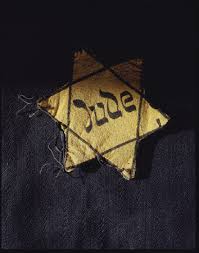
"Are you the chaste one, untouched by evil?" David Kovacs is translating. The words are σὺ σώφρων καὶ κακῶν ἀκήρατος; Notice how a-kēratos (ἀ-κήρατος) is the word for "un-touched" and sṓphrōn (σώφρων) the word for "chaste." The question is whether these sorts of words apply equally to males and to females. For Aristotle, of course, females are botched males, naturally, and therefore, it is important to divide them. The same word, such as sōphrosȳnē (σωφροσύνη) or "temperance," actually divides women and men, for Aristotle, just as for Hitler, Blutes or "blood," actually divided der Jude or "the Jew" and the untainted Arier or "the Aryan."
Homer's Greek did not always so divide people by blood, by temperance, by how and whether they were untouched and untainted and virgin. The epics of Homer actually made good use of a pair of words that marked difference in sex but that gave import to both girls and boys as equals more or less. The pair included parthenos (παρθενος) as the feminine and hēitheos (ἠιθεος) as the masculine. Both, as a pair, together, refer to unmarried young people, to eligible bachelorettes and eligible bachelors.
You can see this pair in the following excerpt from a fragment of papyri recording a bit from Homer's Iliad, Book 22. It's probably from sometime in the 3rd century B.C.E. and is now in the collection of papyri at the University of Heidelberg.

Alex C. Purves in 1891 translated that bit in the following way:
IL.22.128 παρθένος ἠΐθεός τ' ὀαρίζετον ἀλλήλοιϊν.
IL.22.128 maid and bachelor in amorous prate;
The longer context goes like this, where you can see it as a repetition of the pair:
IL.22.123 μή μιν ἐγὼ μὲν ἵκωμαι ἰών, ὃ δέ μ' οὐκ ἐλεήσει
IL.22.123 Surely, if I solicit him, he will have no pity
IL.22.124 οὐδέ τί μ' αἰδέσεται, κτενέει δέ με γυμνὸν ἐόντα
IL.22.124 nor courtesy, but will slay me like a helpless
IL.22.125 αὔτως ὥς τε γυναῖκα, ἐπεί κ' ἀπὸ τεύχεα δύω.
IL.22.125 woman, a naked man, who have put off mine arms;
IL.22.126 οὐ μέν πως νῦν ἔστιν ἀπὸ δρυὸς οὐδ' ἀπὸ πέτρης
IL.22.126 I may not talk with him from tree or stone,
IL.22.127 τῷ ὀαριζέμεναι, ἅ τε παρθένος ἠΐθεός τε
IL.22.127 like a man and a maid, like
IL.22.128 παρθένος ἠΐθεός τ' ὀαρίζετον ἀλλήλοιϊν.
IL.22.128 maid and bachelor in amorous prate;
IL.22.129 βέλτερον αὖτ' ἔριδι ξυνελαυνέμεν ὅττι τάχιστα:
IL.22.129 better to close with him in speedy anger;
IL.22.130 εἴδομεν ὁπποτέρῳ κεν Ὀλύμπιος εὖχος ὀρέξῃ.
IL.22.130 so shall we know to whom the Olympian gives the glory.
And in Book 18 of the Illiad, the pair of words is used a couple of other times.
The pair of words also can be heard in Homer's Odyssey. With Samuel Butler's English translation of 1900, that with some context went like this:
OD.11.35 ἐλλισάμην, τὰ δὲ μῆλα λαβὼν ἀπεδειροτόμησα
OD.11.35 I cut the throats of the two sheep
OD.11.36 ἐς βόθρον, ῥέε δ' αἷμα κελαινεφές: αἱ δ' ἀγέροντο
OD.11.36 and let the blood run into the trench, whereon the ghosts came
OD.11.37 ψυχαὶ ὑπὲξ Ἐρέβευς νεκύων κατατεθνηώτων.
OD.11.37 trooping up from Erebus -
OD.11.38 νύμφαι τ' ἠΐθεοί τε πολύτλητοί τε γέροντες
OD.11.38 brides, young bachelors, old men worn out with toil,
OD.11.39 παρθενικαί τ' ἀταλαὶ νεοπενθέα θυμὸν ἔχουσαι,
OD.11.39 maids who had been crossed in love,
OD.11.40 πολλοὶ δ' οὐτάμενοι χαλκήρεσιν ἐγχείῃσιν,
OD.11.40 and brave
OD.11.41 ἄνδρες ἀρηΐφατοι βεβροτωμένα τεύχε' ἔχοντες:
OD.11.41 men who had been killed in battle, with their armour still smirched with blood;
So now we come to the Bible. Even though the male counterpart is lost after Homer's epic works, there's still reason to believe that readers could have heard "unmarried young person" as what was meant.
Here's Isaiah:
διὰ τοῦτο δώσει κύριος αὐτὸς ὑμῖν σημεῖον
Thus, this is what he will give -- Master himself will give something to you all -- a sign.
ἰδοὺ ἡ παρθένος ἐν γαστρὶ ἕξει
Look, the eligible bachelorette -- in her innermost belly -- will have it
καὶ τέξεται υἱόν
And, she will deliver and have a child, a son
καὶ καλέσεις τὸ ὄνομα αὐτοῦ Εμμανουηλ
And, she will call its name EmmanouĒl
Here's Matthew:
Ἰδού, ἡ παρθένος ἐν γαστρὶ ἕξει
Look, the eligible bachelorette -- in her innermost belly -- will have it
καὶ τέξεται υἱόν
And, she will deliver and have a child, a son
καὶ καλέσουσιν τὸ ὄνομα αὐτοῦ Ἐμμανουήλ
And, she will call its name EmmanouḖl
ὅ ἐστιν μεθερμηνευόμενον
which is rendered literally
Μεθ’ ἡμῶν ὁ θεός
"with us - God"
Here's Luke:
Ἐν δὲ τῷ μηνὶ τῷ ἕκτῳ
And yet in the sixth month
ἀπεστάλη ὁ ἄγγελος Γαβριὴλ ἀπὸ (or possibly ὑπὸ) τοῦ θεοῦ
there was the Messenger GabriḔl from God sent
εἰς πόλιν τῆς Γαλιλαίας, ᾗ ὄνομα Ναζαρὲθ (or possiblyΝαζαρέτ)
into the City-State of Galilaias named Nazareth
πρὸς παρθένον
to an eligible bachelorette,
μεμνηστευμένην (or possibly ἐμνηστευμένην) ἀνδρί,
to be engaged to a man,
ᾧ ὄνομα Ἰωσήφ, ἐξ οἴκου Δαυίδ·
named Joseph, of the household of David.
καὶ τὸ ὄνομα τῆς παρθένου Μαριάμ.
and she, this bachelorette, was named Mariam,
Εἶπεν δὲ Μαριὰμ πρὸς τὸν ἄγγελον,
Mariam, nonetheless, said to the Messenger,
Πῶς ἔσται τοῦτο,
How is this going to be,
ἐπεὶ ἄνδρα οὐ γινώσκω;
seeing how I have not yet known a husband?
Now you tell me, does this translation disrupt the Greek? Does it rob the narrative of female virginity that would be so very important to men and to males and to the Christian Bible?
What I'm hoping to do with English translation is to get at the part of the range of meanings of the Greek word parthenos (παρθενος) that gets beyond the female as the virgin .
The quick point I'm trying to make is one that Hanne Blank shows with her history of the concept of female virginity: there's a huge disparity between how cultures have regarded virginity in girls and women compared with boys and men.
Now, interestingly, Euripedes made use of another Greek word for virgins, untouched. In his play Hippolytus, the playwright has the character Theseus ask the protagonist:
"Are you the chaste one, untouched by evil?" David Kovacs is translating. The words are σὺ σώφρων καὶ κακῶν ἀκήρατος; Notice how a-kēratos (ἀ-κήρατος) is the word for "un-touched" and sṓphrōn (σώφρων) the word for "chaste." The question is whether these sorts of words apply equally to males and to females. For Aristotle, of course, females are botched males, naturally, and therefore, it is important to divide them. The same word, such as sōphrosȳnē (σωφροσύνη) or "temperance," actually divides women and men, for Aristotle, just as for Hitler, Blutes or "blood," actually divided der Jude or "the Jew" and the untainted Arier or "the Aryan."
Homer's Greek did not always so divide people by blood, by temperance, by how and whether they were untouched and untainted and virgin. The epics of Homer actually made good use of a pair of words that marked difference in sex but that gave import to both girls and boys as equals more or less. The pair included parthenos (παρθενος) as the feminine and hēitheos (ἠιθεος) as the masculine. Both, as a pair, together, refer to unmarried young people, to eligible bachelorettes and eligible bachelors.
You can see this pair in the following excerpt from a fragment of papyri recording a bit from Homer's Iliad, Book 22. It's probably from sometime in the 3rd century B.C.E. and is now in the collection of papyri at the University of Heidelberg.
Alex C. Purves in 1891 translated that bit in the following way:
IL.22.128 παρθένος ἠΐθεός τ' ὀαρίζετον ἀλλήλοιϊν.
IL.22.128 maid and bachelor in amorous prate;
The longer context goes like this, where you can see it as a repetition of the pair:
IL.22.123 μή μιν ἐγὼ μὲν ἵκωμαι ἰών, ὃ δέ μ' οὐκ ἐλεήσει
IL.22.123 Surely, if I solicit him, he will have no pity
IL.22.124 οὐδέ τί μ' αἰδέσεται, κτενέει δέ με γυμνὸν ἐόντα
IL.22.124 nor courtesy, but will slay me like a helpless
IL.22.125 αὔτως ὥς τε γυναῖκα, ἐπεί κ' ἀπὸ τεύχεα δύω.
IL.22.125 woman, a naked man, who have put off mine arms;
IL.22.126 οὐ μέν πως νῦν ἔστιν ἀπὸ δρυὸς οὐδ' ἀπὸ πέτρης
IL.22.126 I may not talk with him from tree or stone,
IL.22.127 τῷ ὀαριζέμεναι, ἅ τε παρθένος ἠΐθεός τε
IL.22.127 like a man and a maid, like
IL.22.128 παρθένος ἠΐθεός τ' ὀαρίζετον ἀλλήλοιϊν.
IL.22.128 maid and bachelor in amorous prate;
IL.22.129 βέλτερον αὖτ' ἔριδι ξυνελαυνέμεν ὅττι τάχιστα:
IL.22.129 better to close with him in speedy anger;
IL.22.130 εἴδομεν ὁπποτέρῳ κεν Ὀλύμπιος εὖχος ὀρέξῃ.
IL.22.130 so shall we know to whom the Olympian gives the glory.
And in Book 18 of the Illiad, the pair of words is used a couple of other times.
The pair of words also can be heard in Homer's Odyssey. With Samuel Butler's English translation of 1900, that with some context went like this:
OD.11.35 ἐλλισάμην, τὰ δὲ μῆλα λαβὼν ἀπεδειροτόμησα
OD.11.35 I cut the throats of the two sheep
OD.11.36 ἐς βόθρον, ῥέε δ' αἷμα κελαινεφές: αἱ δ' ἀγέροντο
OD.11.36 and let the blood run into the trench, whereon the ghosts came
OD.11.37 ψυχαὶ ὑπὲξ Ἐρέβευς νεκύων κατατεθνηώτων.
OD.11.37 trooping up from Erebus -
OD.11.38 νύμφαι τ' ἠΐθεοί τε πολύτλητοί τε γέροντες
OD.11.38 brides, young bachelors, old men worn out with toil,
OD.11.39 παρθενικαί τ' ἀταλαὶ νεοπενθέα θυμὸν ἔχουσαι,
OD.11.39 maids who had been crossed in love,
OD.11.40 πολλοὶ δ' οὐτάμενοι χαλκήρεσιν ἐγχείῃσιν,
OD.11.40 and brave
OD.11.41 ἄνδρες ἀρηΐφατοι βεβροτωμένα τεύχε' ἔχοντες:
OD.11.41 men who had been killed in battle, with their armour still smirched with blood;
So now we come to the Bible. Even though the male counterpart is lost after Homer's epic works, there's still reason to believe that readers could have heard "unmarried young person" as what was meant.
Here's Isaiah:
διὰ τοῦτο δώσει κύριος αὐτὸς ὑμῖν σημεῖον
Thus, this is what he will give -- Master himself will give something to you all -- a sign.
ἰδοὺ ἡ παρθένος ἐν γαστρὶ ἕξει
Look, the eligible bachelorette -- in her innermost belly -- will have it
καὶ τέξεται υἱόν
And, she will deliver and have a child, a son
καὶ καλέσεις τὸ ὄνομα αὐτοῦ Εμμανουηλ
And, she will call its name EmmanouĒl
Here's Matthew:
Ἰδού, ἡ παρθένος ἐν γαστρὶ ἕξει
Look, the eligible bachelorette -- in her innermost belly -- will have it
καὶ τέξεται υἱόν
And, she will deliver and have a child, a son
καὶ καλέσουσιν τὸ ὄνομα αὐτοῦ Ἐμμανουήλ
And, she will call its name EmmanouḖl
ὅ ἐστιν μεθερμηνευόμενον
which is rendered literally
Μεθ’ ἡμῶν ὁ θεός
"with us - God"
Here's Luke:
Ἐν δὲ τῷ μηνὶ τῷ ἕκτῳ
And yet in the sixth month
ἀπεστάλη ὁ ἄγγελος Γαβριὴλ ἀπὸ (or possibly ὑπὸ) τοῦ θεοῦ
there was the Messenger GabriḔl from God sent
εἰς πόλιν τῆς Γαλιλαίας, ᾗ ὄνομα Ναζαρὲθ (or possiblyΝαζαρέτ)
into the City-State of Galilaias named Nazareth
πρὸς παρθένον
to an eligible bachelorette,
μεμνηστευμένην (or possibly ἐμνηστευμένην) ἀνδρί,
to be engaged to a man,
ᾧ ὄνομα Ἰωσήφ, ἐξ οἴκου Δαυίδ·
named Joseph, of the household of David.
καὶ τὸ ὄνομα τῆς παρθένου Μαριάμ.
and she, this bachelorette, was named Mariam,
Εἶπεν δὲ Μαριὰμ πρὸς τὸν ἄγγελον,
Mariam, nonetheless, said to the Messenger,
Πῶς ἔσται τοῦτο,
How is this going to be,
ἐπεὶ ἄνδρα οὐ γινώσκω;
seeing how I have not yet known a husband?
Now you tell me, does this translation disrupt the Greek? Does it rob the narrative of female virginity that would be so very important to men and to males and to the Christian Bible?
Tuesday, September 13, 2011
Shame, Philomela, you unbiblical liberal bird
"When we say 'built on common ground,' we mean that the Common English Bible is the result of collaboration between opposites: scholars working with average readers; conservatives working with liberals; teens working with retirees; men working with women; many denominations and many ethnicities coming together around the common goal of creating a vibrant and clear translation for 21st century readers, with the ultimate objective of mutually accomplishing God's overall work in the world."
-- Paul Franklyn, PhD, associate publisher for the Common English Bible
"All these are unpersuasive for the reasons given. Yet Gorgias' exclamation to the swallow when she flew down and let go her droppings on him is in the best tragic manner: he said, 'Shame on you, Philomela'; for if a bird did it there was no shame, but [it would have been] shameful for a maiden. He thus rebuked the bird well by calling it what it once had been rather than what it now was."If you know the story of Philomela in Greek mythology, then you know how she was raped and how her rapist cut her tongue out because she yelled out exclamations of protest and how tragically in the end the gods translated her into a swallow. If you know the Greek language of Aristotle here in his Rhetoric (Bekker page 1406b line 18), then you know how he's calling Philomela a παρθενον /parthenon/ but how he's praising Gorgias for calling her a bird, or rather for calling this swallow a shameful Philomela, because she's pooped on him. That's right. Aristotle himself is saying that Philomela is still a "parthenon" who [read between the lines here] pooped on the man who desired her ['Shame on you, Philomela, because you did this to a man before you were a bird and while you were still a virgin, conservatively speaking, before he transformed you into something else, you maiden. How inappropriate of you. How shameful of you']. Yes, this can be subtle stuff. And in our status quo world, so conservative and so man first, we should not read too much into these things. And if you do, then shame on you for your protests.
-- Aristotle
If you know how male English translators care about this word, parthenon, especially when it's sacred, then you know that "conservatives" translate it "virgin" while their opposites, the "liberals," translate it "maiden." If you pay attention to how the man Paul Franklyn divides the world, then you see his polar opposite binaries as follows:
"scholars" / "average readers"Opposites, in this way of thinking, are distinct even if there can be something in common between them, some common ground below them.
"conservatives" / "liberals"
"teens" / "retirees"
"men" / "women"
"denominations" / "ethnicities"
"a bird pooping" / "a maiden dropping protests of No! No! No! No!"In these binaries, very subtly, not all is equal between the opposites. Notice, if you will, how the men ordering the opposites put the better one on the left of / the lesser one.
"men" / "women"Now listen to the language, the ordering of pairs, from BBB blogger Wayne Leman in his recent post on the question of whether Franklyn's Common English Bible translation is "liberal" or not. Leman is attempting to deconstruct the "conservative" / "liberal" binary. Ironically, however, he re-constructs his own binary, with "liberal" as the still-botched category:
"denominations" / "ethnicities"
"virgin as translation of παρθενος" / "maiden or young lady or young woman or (unmarried) girl as translation of παρθενος"
"Some conservatives consider translation of Hebrew almah in this verse [i.e., Isaiah 7:14] as 'young woman' instead of 'virgin' to be liberal. But is it, or does it actually reflect accurate biblical scholarship?"Did you see it? Here it is:
"What you think might be a liberal translation of some verse may be shown to be an accurate translation, especially when you find other verses in the translation which continue to support whatever is your own theological viewpoint."
"accurate biblical scholarship" / "liberal"
"an accurate translation" / "a liberal translation"Of course, Leman is arguing that "young woman" (as the best English for "almah" in Isaiah 7:14) is an actual reflection of biblical scholarship that is accurate. In opposition to that, for Leman, is the very same translation that is motivated by what would be liberal.
Commenter Joel Hoffman says something similar, quoting and with some nuance correcting Leman:
"I think everyone agrees that changing 'virgin' to 'young woman' for alma in Isaiah 7:14 is 'accurate biblical scholarship,' but the decision to prefer that scholarship over tradition is liberal."Here, as a variation, Hoffman's binary pits what is good against what is (not "liberal" exactly but what is, rather, instead) botched "tradition":
"accurate biblical scholarship" / "tradition"The point for both Leman and Hoffman is that which opposes "accurate biblical scholarship" is botched, is lesser, is "in-accurate" and "un-biblical" and "not scholarly."
The binary (i.e., that "either / or" division) is what allows men who know things to know them op-positionally. And what comes first (i.e., on the left side of the pair in a left-to-right listing) is determined, actually pre-determined by them, to be naturally what's best.
---
So let's now look at how this works out in Bible translation. Franklyn lists these binaries as opposites that must find common ground for his Common English Bible translation:
"men" / "women"When you look at the CEB team of translators (i.e., individuals on either side of his oppositions), what's interesting is how somebody like Adele Berlin on the team can neither be one of the men nor is actually able to be person of a Christian denomination. Must Berlin, a woman, be the opposite of the men? Is she, as not a member of a denomination, a person of some specific marked ethnicity? Which one? Is this a Christian / Jewish binary?
"denominations" / "ethnicities"
It's no secret that the problem in Bible translation with the words almah (עלמה) and pathenos (παρθενος) is the problem over whether the girl Mary (the mother of Jesus) was a virgin, or not, when these words are used.
How this seems to mirror Gorgias' and Aristotle's own tragic problem of whether Philomela is an ὄρνιθι /ornithi/ or a παρθένος /parthenos/. One is appropriate and not shameful; the other is inappropriate, and shameful.
The Hebrew alma is in Isaiah 7:14. So is the Greek pathenos in the earliest translation of Isaiah 7:14. Whoever the maiden is that this scripture and that these words refer to might have been a virgin. And the "young woman," as the common denominator CEB translation team has translated the Hebrew, might she be the prophesied Mary, the mother of Immanuel as Jesus, or not?
The binary way of knowing the answer will not tolerate ambiguity. Either she is, or not. Either this is accurate, or not. Either it is respectable, or it's shameful.
When we get to the New Testament, then we leave the Hebrew and have only the Greek. Moreover, both in the gospel of Matthew and in the gospel of Luke, we have the story of the pregnant Mary not being "known" or "impregnated" by her man, her fiancé, her husband, Joseph. In both stories, she is a virgin with child by the Holy Spirit. So now, in these contexts, is the Greek pathenos (παρθενος) any less ambiguous than the Hebrew almah (עלמה) and its Greek translation the Greek pathenos (παρθενος) in Isaiah 7:14? Do the stories of the virgin Mary require the Greek word to be translated unambiguously in Matthew 1:23 and in Luke 1:27?
Is one translation accurate, biblical, scholarly, respectable, and the other not?
I'll let you answer. And to help, it may be interesting to see how various translators have translated the words:
the Hebrew almah (עלמה) as "young woman" in Isaiah 7:14 - JPS, JPCT, RSV, NET, NEB, NABRE 2011, NAB 2011, The Inclusive Bible
the Hebrew almah (עלמה) as "the young woman is with child" and "a young woman who is pregnant" and "A girl who is presently a virgin" and "a young woman is now with child" and "young woman is pregnant" in Isaiah 7:14 - NRSV and Good News Translation and The Message and The Bible in Basic English and the Common English Bible
the Hebrew almah (עלמה) as "virgin" in Isaiah 7:14 - pretty much all the other translations
the Greek pathenos (παρθενος) as "virgin" in LXX Isaiah 7:14 - Sir Lancelot C. L. Brenton, NETS by Moisés Silva
the Greek pathenos (παρθενος) as "maiden" in Matthew 1:23 - Weymouth, Richmond Lattimore
the Greek pathenos (παρθενος) as "the unmarried girl" in Matthew 1:23 - Ann Nyland
the Greek pathenos (παρθενος) as "young woman" in Matthew 1:23 - Willis Barnstone
the Greek pathenos (παρθενος) as "virgin" in Matthew 1:23 - pretty much all the other translations
the Greek pathenos (παρθενος) as "young woman" in Luke 1:27 - The Inclusive Bible
the Greek pathenos (παρθενος) as "the unmarried girl" in Luke 1:27 - Ann Nyland
the Greek pathenos (παρθενος) as "virgin" in Luke 1:27 - pretty much all the other translations
the Greek pathenos (παρθενος) as "girl" in Aristotle's Rhetoric - W. Rhys Roberts
the Greek pathenos (παρθενος) as "young lady" in Aristotle's Rhetoric - J. H. Freese
the Greek pathenos (παρθενος) as "maiden" in Aristotle's Rhetoric - George A. Kennedy
the Greek pathenos (παρθενος) as "virgin" in Aristotle's Rhetoric - anon, 1683
Is one translation accurate, biblical, scholarly, respectable, and the other not?
Monday, September 12, 2011
who learned to ask questions? what's the benefit of the doubt?
This weekend, I finished reading Rachel Held Evans's book Evolving in Monkey Town: How a Girl Who Knew All the Answers Learned to Ask the Questions, and I must say that it is an impressive memoir in which the author gets at how she has had several, incredibly thoughtful human conversions as an adult. To me, that's what learning is. That's awfully important. When we stop learning, stop changing or "evolving," then we die. Viewpoints change. When it comes to religion, to views about sex and gender, to the Bible and what it offers us on religion, on God, on sex and gender, then we can hope our methods for learning, for knowing, for understanding, for believing can adapt some to circumstances over time. Otherwise we insist on the sort of objectivity that stuck Aristotle in a science that makes females naturally lesser than males. Otherwise we insist on the sort of arrogant absolutism with "apparently plain meanings of biblical texts" that makes females naturally lesser than males so that the former can only learn from the latter, and not the reverse.
(See how Rachel blogs today, wonderfully and powerfully on the rigid weaknesses of "the complementarian manifesto, the Danvers Statement," endorsed by men like Wayne Grudem and John Piper of the Council on Biblical Manhood and Womanhood.)
Last week, I posted a few paragraphs excerpted from Rachel's book. Kristen made a typically astute comment with a question, an important question:
"Rachael saw her father like the Father God; but her mother was so like Christ, and yet she doesn't mention that; only that her mother pointed her to Christ. Why is that?"
So today, I'd like to look at how else Rachel writes about her mother in relation to God. Is God only a father? Or is the image and imagination of God as Father as inclusive of Rachel's female parent as it is of her male parent? Here are a few more paragraphs, a few more pages into Rachel's book, a few more years into her life and her learning, her evolving. What do you think? And do you see the image of God, male and female, in either of your own parents?


(See how Rachel blogs today, wonderfully and powerfully on the rigid weaknesses of "the complementarian manifesto, the Danvers Statement," endorsed by men like Wayne Grudem and John Piper of the Council on Biblical Manhood and Womanhood.)
Last week, I posted a few paragraphs excerpted from Rachel's book. Kristen made a typically astute comment with a question, an important question:
"Rachael saw her father like the Father God; but her mother was so like Christ, and yet she doesn't mention that; only that her mother pointed her to Christ. Why is that?"
So today, I'd like to look at how else Rachel writes about her mother in relation to God. Is God only a father? Or is the image and imagination of God as Father as inclusive of Rachel's female parent as it is of her male parent? Here are a few more paragraphs, a few more pages into Rachel's book, a few more years into her life and her learning, her evolving. What do you think? And do you see the image of God, male and female, in either of your own parents?


Did you notice how Rachel says her mother influenced her? What is it her mother teaches her about? And for whom is she to look out? What does she encourage her and her sister, as equals, to do? How does she speak about others and who does she herself stand up to? And why? Did you notice how people around Rachel's mother feel when they are around her? What did Rachel, and Amanda, inherit from their mother? Why, nonetheless, do some "a lot of good Christian people" try to convince her that her mother's characteristic -- lived and taught and passed on like genetic material -- is "a sort of spiritual liability"? Whose ways are more like "God's ways"? Whose are "higher"? And who is this other woman, also a mother, whom Rachel mentions in the context of speaking about Justice and equality and egalitarianism and the deserved chance to be loved and her own mother? Who is this one whose life and death rocks Rachel's world? She is Zarmina; so, who's she?
(So I'm asking you now to buy Rachel's book and to read it for yourself. To see whether you and your world might evolve a little too. To see what and how you might learn something. Yes, I know Rachel is a woman. John Piper says it's okay for all of you men to learn from her, a little only. Just don't let her become your spiritual head. After you read Rachel's book, then come back over here; and pardon me for linking to a world-rocking video of this other mother, the one that changes Rachel's perspectives in profound ways. Maybe click this link first and read again a bit more. Just only then and after that click this link from the Revolutionary Association of the Women of Afghanistan when you are ready and not before, please. We may never be ready. But what can we learn? Can we evolve?)
Friday, September 9, 2011
who and God had a lot of things in common
If Frank Schaeffer and Pearl S. Buck are my MK cousins (that is, are evangelical Christian missionaries' kids, like me), then Rachel Held Evans is similarly kin to my spouse (whose parents are in full-time Christian education and churchwork). She recently finished Held Evans's book Evolving in Monkey Town: How a Girl Who Knew All the Answers Learned to Ask the Questions, saying how it really resonated with her, and so now I'm reading it. Just a few pages in, I'm struck by how the author describes her parents, and how differently. Through daughter and little girl eyes, she somehow finds God like father but mother otherwise. Take a read and see for yourself. A telling contrast comes in the final sentence of the four paragraphs excerpted below. I don't have much time really to say more here at the blog but have been thinking about this all day, about imagination and where it ends up sometimes before it can evolve elsewhere. Your thoughts?
The daughter of a genuine, certified theologian, I'd memorized the "Four Spiritual Laws" before I'd memorized my own address. My father earned a graduate degree from Dallas Theological Seminary, a school famous for producing megachurch pastors like Chuck Swindoll, Tony Evans, and Andy Stanley. Instead of pursuing full-time ministry, however, my father committed his life to Christian education, which I suppose explains the plastic cups. A college professor, he often invited his brightest students over for coffee and long talks about hermeneutics and eschatology and epistemology. I loved falling asleep to the sound of their voices undulating from the living room. I felt secure in knowing that while I slept, my father was awake having important conversations about God.
I always looked up to my father with a sense of reverent awe. It wasn't that I thought he possessed supernatural powers or anything; I just imagined that he and God had a lot of things in common, that they subscribed to the same magazines and wore similar shoes. Looking back, I realize how important it was that my father loved me so openly and listened so carefully. My first impressions of my heavenly Father were that he too was gentle, playful, and kind.
Despite knowing about dispensationalism long before I probably should have, I never felt trapped in a world of endless churchgoing. My mother had been raised Independent Baptist and as a girl was forbidden to dance and go to movies. Determined to avoid legalism, she let Amanda and me wait until we were good and ready before we got baptized, took communion, or asked Jesus into our hearts. Her private disdain for potlucks and church business meetings kept us from being at church every time the doors were opened, and I noticed that she got a little fidgety whenever the pastor discussed wives submitting to their husbands. I loved this about her, the same way I loved the scent of her cherry-almond lotion when she tucked me into bed at night.
A substitute teacher at my elementary school, my mother earned a reputation for doting on the needy kids. Those with absent parents, stained shirts, runny noses, and learning disabilities always left her classroom beaming with self-confidence. I think I must have gotten my bleeding heart from her, which, combined with my father's cautious idealism, accidentally made me into a liberal. If my father gave Christianity a head, my mother gave it a heart and hands, and it was her tender telling of the story of the cross, mingled with cherry almond, that first moved me to ask Jesus into my heart.
Subscribe to:
Posts (Atom)